Friday, 17 July 2020

The Perfect Trilogy?

Recently I have completed a portion of my big 2020 re-read in finishing my re-reads of A Game of Thrones, A Clash of Kings, and A Storm of Swords. I've come away from that more in love with the series than I was before, but I also came away wondering something. Were the first three novels a perfect trilogy?

In the original pitch for this series, Martin declared he was going to be writing a trilogy for a A Song of Ice and Fire, and we know how well that turned out. He did fairly rapidly complete the first three installments between 1996, 1998 and 2000, with a five year gap between ASOS and A Feast for Crows, a six year gap between it and A Dance With Dragons and a ???? gap between it and The Winds of Winter. The issues with A Feast for Crows and A Dance with Dragons I intend to address later, after my mammoth reread of A Feast with Dragons. For now though, I'm going to examine the first 'trilogy' as it were.

Having been completed within only two years of each other, the first three books do end up feeling very tightly paced. The same characters are almost omnipresent in each novel (save for the introduction of new view points later in ACOK and ASOS) but each adds more to the plot than they might detract. Overall the same characters telling the same story. ASOS is where this begins to diverge, but not as much as you might think.


Going forward I want to express that yes these aren't a perfect trilogy, there are too many loose ends, but I do think that the narrative is concise and well plotted directly to the end. It ends the first 'arc' of the series if you will.

To begin with, we have the grand opening to the series which is masterfully crafted at Winterfell in AGOT. We are, after the fabulous prologue, introduced seriatim to the major point of view characters, establishing important relationships, the setting, and the interplay between the plots in Westeros in Essos in a very compact and even handed manner. With the exception of the introduction of Davos and Theon in ACOK which counterbalances the loss of Ned's POV, we don't have many new viewpoint characters until Sam and Jaime counterbalances the loss of Catelyn in ASOS and Theon disappears from the story until ADWD.

Between these three books there's some remarkable continuity in both the scope of the plot and the range of the characters. Dany, for instance, is our only voice on Essos until well into AFFC or ADWD, and carries that portion of the story from Pentos to Slavers Bay when people begin to drop off Westeros in drips and drabs. Then in Westeros itself we have a stable cast of characters until the end of ASOS. They, broadly speaking, tell the story of the War of the Five Kings from top to bottom, until it can be said to peter out by the end of ASOS. 

In miniature it can be said that this trilogy tells the tale of the Northern War for Independence, the Rise of House Lannister, the war between the Night's Watch and the Wildlings, with the creeping threat of the Others ever present, and the rise of The Prince That Was Promised. These four threads are both, directly in the narrative and then in the background, sprinkled throughout with background characters and other relationships between them. Selmy in the first book to his appearance with Dany on Qarth being an example of a character who provides important background plot advancement. Varys being the ultimate example of that.

To argue specifically for each of these overarching plots:

The War for Northern Independence (itself a sub plot of the War of the Five Kings) is set off by the execution of Ned Stark by Joffery. This causes a sudden shift in Northern war aims, and Rob Stark is crowned king. This is what ends AGOT and picks up in the next two installments, with Rob's battles and campaigns coming to the forefront or the background across the next two installments. These all culminate in the Red Wedding half way through ASOS, where the king is dead and we discover Roose Bolton is to become Warden of the North and supplant House Stark. Now there's the outliers like the sieges of Riverrun and Raventree Hall, but even Tywin rightly points out that with so many highborn hostages, it's all over but the kneeling. So this is one plot that comes to a dark but satisfying conclusion in ASOS, but which leads into one of the other plots which I'll address in a moment.

This second plot thread is about the Rise of House Lannister. This one is, I admit, a bit more nebulous, but it is conveyed through the eyes of Tyrion and Sansa (and to me this has a nice bit of imagery with their forced wedding) as we see in the background Tywin making very profitable marriages. Whether it was the pre-series marriage of Cersei to Robert, or the gaining of lands by marrying Tyrek to Ermesande Hayford or the awarding of Lacel Lannister the lands of the extinct House Darry, these are all small steps. Each is a small move to take a bite out of one portion of Westeros and put down Lannister roots to establish Lannister rule. This continues with Joffery and then Tommen's marriage to Margery Tyrell, and with Tywin's plans to marry Cersei off to someone. Arguably it reaches its apogee just after the Purple Wedding, only for the set up to come crashing down when Tyrion shoots Tywin with a crossbow and Cersei attempts to take charge.

The war between the Night's Watch and the Wildlings is pretty self-explanatory I think. Just to recap, the events of AGOT directly set up Mance Rayder's attack on the Wall in ASOS and in so doing sowed the seeds for the end of that direct military conflict, but not the peace, which is one of those dangling plot threads left over for later. 

Finally we have the rise of the Prince That Was Promised with Dany. Her whole arc is in many ways, messianic. From braving the flames to her dragons hatching with a cosmic portent overhead in AGOT, braving the desert and then the temptation of devils in Qarth in ACOK, to finally accepting her role as a queen in ASOS but perhaps refusing the call, when she decides to settle down in Mereen. This one is, aside from Bran's arc, one of the most magical in the whole series, with dragons, warlocks, wizards, and quests galore. She goes from being a beggar, to having the only living dragons in the known world. Added to that the not unreasonable speculation she is that promised "prince" with her 'birthing' the dragons in fire and blood and being a direct descendant of Aegon's line, it's not unreasonable to see these first three novels being about her acceptance of her role as a ruler before settling into the Meereenese Blot at the end of ASOS.

Like I said before, these are not perfect points, or even endings. They quite notably don't say anything for Bran, Sansa, or Arya's plot arcs. And I admitted up front that this was an imperfect analogy. However, that being said, I would argue that ASOS can be considered to wrap up these important plots and narrative arcs which directly set the stage for later events.

Some of those dangling plots are of course the emerging War in the North, the Meereenese Blot, the Three Eyed Crow and Arya and her identity, Sansa and Davos, among others. However, their stories all either have dramatic endings or set up the major narratives for later. 

Sansa for instance at last escapes King's Landing. Arya leaves Westeros and begins her journey down the nebulous well of identity. Bran makes it beyond the Wall. Finally Tyrion is being set up for greater things, some of which remain a bit mysterious.

The introduction of new characters, secondary plot points, and other regional issues (like Dorne) in AFFC and ADWD may explain the frustration some readers had with those novels. It could be reasonably said that unlike these first three books, where entire narrative arcs either conclude or are set up for their next steps, these two books introduce more but end less as the reader is essentially left in limbo.

Now, because of that very limbo, I do feel that I can reasonably conclude that the first three books are a great narrative trilogy, inasmuch as they establish the next phase of the story. They have tightly plotted and well developed character and narrative arcs which drive the story forward and give us satisfying next steps for our principle cast. AGOT is our beginning, and ASOS is our end. To borrow from another series, it is not the ending, but it is an ending. 

For now, it's probably the most satisfying narrative conclusion we have in this series until the final words are typed in A Dream of Spring.

Thursday, 30 May 2019

Show Ends Book Ends Not the Same

This last Sunday was the first Sunday in quite a long time where people didn't get to hum along to the most catchy theme music in fantasy for a while. Yes, Game of Thrones has finally come to an end. What an end that was though. Wherever you stand on it, just let me get something out of the way;

The books will not end the same as the show. The idea that it will is sheer madness.

Since the very divisive ending of the show, it seems there has been something of an uptick in people speculating how close the show ending will come to the book ending. The short version is, not very close really, the longer version is below.


First however, let us get something out of the way, what does the author say about it. Well, GRRM on his Not a Blog website, says surprisingly little. Here is exactly what he said:
How will it all end? I hear people asking. The same ending as the show? Different? 
Well… yes. And no. And yes. And no. And yes. And no. And yes. 
I am working in a very different medium than David and Dan, never forget. They had six hours for this final season. I expect these last two books of mine will fill 3000 manuscript pages between them before I’m done… and if more pages and chapters and scenes are needed, I’ll add them. And of course the butterfly effect will be at work as well; those of you who follow this Not A Blog will know that I’ve been talking about that since season one. There are characters who never made it onto the screen at all, and others who died in the show but still live in the books… so if nothing else, the readers will learn what happened to Jeyne Poole, Lady Stoneheart, Penny and her pig, Skahaz Shavepate, Arianne Martell, Darkstar, Victarion Greyjoy, Ser Garlan the Gallant, Aegon VI, and a myriad of other characters both great and small that viewers of the show never had the chance to meet. And yes, there will be unicorns… of a sort… 
Book or show, which will be the “real” ending? It’s a silly question. How many children did Scarlett O’Hara have?
People have read a lot into this (especially the Scarlett O'Hara comment, it's 3 in the novel and 1 in the film in case you're wondering) and they really ought not to. For one thing, nowhere does he ever say this is the same ending, though he does say he will write it and we can read it, then the internet can argue about which is better. The author is also pointing out that they are both working in a vastly different medium, which means stories, plots and entire character arcs had to change to fit the particular medium of television and its limitations.

Two prime examples are those of Cersei and Arya.

With Cersei, I've briefly pointed out she is the Mad Queen we deserve, but her story in Game of Thrones is vastly different from her story in A Song of Ice and Fire. To be clear, the show essentially cuts her character off at the legs, flipping back and forth on what drives her, protecting her children or power (it settles on power) but in the books it's one thing. The valonqar prophecy of Maggie the Magi. This is the reason she hates Tyrion, this is why she hates other queens and this is why she is so hell bent on keeping her kids on the throne.

In Game of Thrones however, her goal is power, pure and simple. There isn't a really complex story line about loving her children (who she seems to miraculously forget about) or trying to tragically prevent a prophecy from coming true, it's merely about a woman winning power so she can never be hurt again. Then she dies in her lover/brother's arms.

The exclusion of the valonqar prophecy from the show makes for a dramatically different character arc and ending. The reason being is that it makes Show Cersei's demise less tragic and more sympathetic, despite the book Cersei not being a really sympathetic character who is not going to die tragically in the arms of her brother. If you're wondering about Cersei's eventual fate, just remember the words Tyrion spoke which have been rattling around in Jaime's head "she's been fucking Lancel and Osmund Kettleblack and probably Moon Boy for all I know" which he can't stop thinking about.

Is she pregnant? Possibly. Is it Jaime's? Who can say?

As for Arya's story line, well let's just say her odds of killing the book's non-existant Night King are pretty slim.

Beinhoff and Weiss, famously dismissive of things like themes, have missed the point of Arya's character arc. Since the first book of the series Arya's arc has all shifted around themes of vengeance and identity. Ever since the Hound killed Micah she has been fixated on revenge, but in her quest for revenge she has also begun to lose her identity as a Stark. Her only real link back to her family is with the show's oft overlooked warging abilities in the Starks and to her direwolf Nymeria, who the show has also forgotten. Her story will be about remembering who she is, something the Faceless Men are currently attempting to make sure she forgets, though not very well as seen in her Winds of Winter Chapter.

The one beat the show probably gets right is her murder of Walder Frey, however, it misses the bigger point of that story since the show omitted Lady Stoneheart. The other side of the coin in Arya's character arc is her quest for vengeance, something the show doesn't really address either. In that story line we already have the foil for Arya's character. Her deceased mother who is consumed with vengeance after having come back wrong and seems to exist only to take vengeance on her foes. This is vengeance gone too far, and we can already probably grasp the direction Arya will have to go in order to end the eternal cycle of vengeance and it has little to do with a leader of the Others and more to do with her immediate family. Maybe that will force her to sail away from Westeros, or maybe not.

These are just two examples. Sansa's story line is a similar one, interchanging her for Jeyne Pool, leaving out Harry the Heir, any issues in her claims to Winterfell, ect. Tyrion's as well leaves out his duplicity with Young Griff, his important background with Tysha, and his psychological issues the show doesn't really address which will be big in his character ending. Euron's character... well let's just say he is going to be very different in the books. This doesn't even address the plot holes left by the show ending...

Allow me though, to show the dichotomy that seems to exist with how people are interpreting this almost unprecedented event in pop culture. I think that the problem is nicely summed up in Michael from Off the Bookshelf's post This is it essay:
I think there are two ways to approach the ending the show has given us. 
The first: Martin told Benioff and Weiss the general outline of the bullet points at the end of the story. Benioff and Weiss decided to switch some of those around because they didn’t like how it ended with the Others being defeated, and didn’t really care for XYZ plot points in particular. 
The second: Martin told them the general outline of the ending. They adapted those bullet points as closely as they could, based on what they knew and what they’d already done in the show.
While I acknowledge this is a valid take, I must take great pains to point out that so much from the books has diverged from the show starting with Season 4 that the idea they have adapted points and endings from the book very closely should be disregarded off the bat. The missing Lady Stoneheart and Nymeria for Arya alone are probably game changers for how she gets to her ending (which may even be something as simple as leaving Westeros). They may even have changed who lives and who dies just so they can get shock value, which is something they have confessed to doing already along with other retcons.

That they have already killed major characters off out of order, brought some back, or had some who die live, Bronn becoming the Lord of Highgarden when he's already the Lord of Stokeworth...well that means we cannot definitively say Game of Thrones has ended remotely similar to A Song of Spring. That it would be is just super unlikely for the reasons outlined with two characters alone.

Perhaps the penultimate reason for the different ending from the show in the books is the book series firm grasp on feudal politics, something the show lacked often.

Here's the thing, Bran Stark ending up as the King of the Six Kingdoms is incredibly unlikely. While some kind of Great Council is possible, it electing Bran Stark, whose story lies Beyond the Wall, is hard to swallow. His story has never once interacted with the politics of the War of the Five Kings, he has no claim to the Iron Throne, and his attachment to the magic in the books was utterly irrelevant in the show. As another issue, for Bran to sit on the Iron Throne as a Stark, yet the Starks in the North also being independent...that's unfeasible. The Iron Islands, Dorne, and even the Vale would start to think independence is better than being de facto ruled by the North.

Who will sit on the Iron Throne though? Well, that I can't tell you and we just need to Read And Find Out.

The one thing I can definitively say is that, in broad strokes Game of Thrones is going to be similar to how A Song of Ice and Fire ends, but it lacks the important magic and supernatural aspects we see in the books which will effect the characters and overall ending. However, don't count on having watched the show to let you guess how the books are going to end, you'll be disappointed.

Saturday, 27 January 2018

The Six Kingdoms

Because for some reason I am unable to post this map on some websites, I am hosting the image for my own ASOIAF fiction piece here:

I give you Westeros and the Six Kingdoms circa 1001 AC:


Tuesday, 15 April 2014

Catelyn II

WARNING SPOILERS FOR ALL BOOKS AHEAD:

Synopsis:

In our first repeat chapter of the book we have another good character piece from Catelyn as well as the take off of the conspiracy which will drive the novels and leave some very pertinent unanswered questions. Catelyn and Ned finish lovemaking only for Maester Luwin to arrive bearing an unknown message delivered to him in secret. It proves to be from Catelyn's sister Lysa. The message implicates the Queen in the murder of Jon Arryn. Ned, who had been about to refuse the Handship is forced by his wife (and maester's) counsel to take it in order to solve the murder of his old mentor. Finally the question of where the children will go is settled, much to the pain of both parents.

What do we learn?:

Culture:

Here we get some interesting insights into the nature of bastards in Westeros. I won't comment much more since I'm saving my thoughts on that for another essay. Here though it's interesting that bastards are seen as outside the line of succession whereas in our time bastards could easily make viable candidates for the throne. The reasons for bastards being socially unacceptable here aren't immediately clear (as Catelyn even mentions that Jon's children could challenge her grandchildren for Winterfell) but seems to have more to do with the pride and emphasis on pure blood lines of the Great Houses versus any real social concerns that might impede a bastard from taking his place amongst the families of the noble houses.

Here also is our first look at the maesters, the intellectual elite of Westerosi society. The maesters are the scholars, healers, librarians, teachers, postmen, and general intelligentsia of Westeros. They do not hold a monopoly on knowledge, but they seem to be the established and entrenched, and accepted order of teachers and the holders of knowledge.

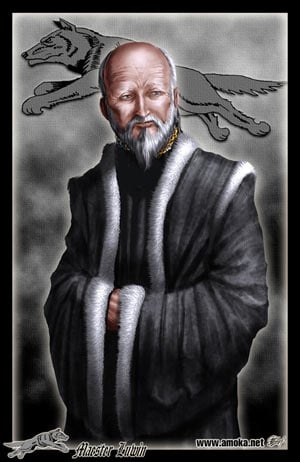
The role in which we see maester Luwin is one part teacher, scholar, doctor, adviser, and spy/post master for the Lord of Winterfell. He helps deliver the Lord's children, advises him in times of trouble, and even pursues his own studies part time. There are apparently only one maester at each castle, but he has servants which explains how he can carry out such a myriad of duties.

Credit to Amoka


There is really no real world analogy to the maesters of Westeros, they serve in a role that monks did for many noble families in Europe and Japan, and they occupy the place of the scholars of the early and late Middle Ages, then of course they even occupy the role of doctor. It's a fascinating social category which fills a huge number of niches in Westerosi society. That gives the maesters order exceptional power, but as I've seen many argue, also retards progress as it traps learning and knowledge in the hands of one organization.

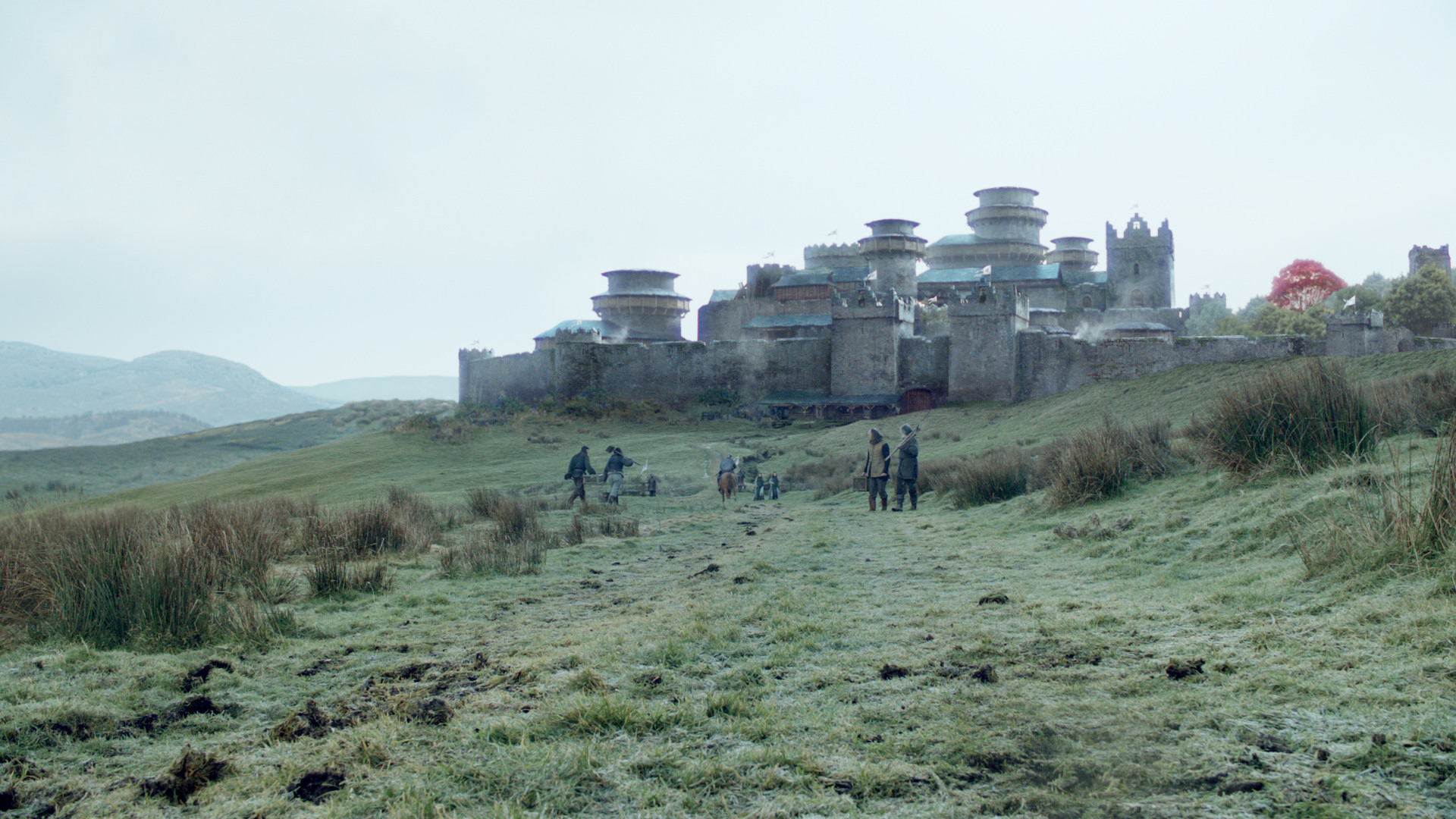
Something else interesting to note is the clear technical ingenuity displayed in the construction of Winterfell, the keep built over natural hot springs which provide warmth even in the depths of winter and even allow for maintaining greenhouses! It speaks of a sort of lost technology from ancient times, or at the very least that the builder of Winterfell was farsighted and must have been a prodigy of some sort.

Winterfell, heart of the North.


Political:

Here we see some great feudal politics at work, and it even gets wound up in character interpretation.

Ned is considering refusing the position of Hand as he does not relish the idea of leaving his home and his family to run Robert's kingdom for him, and he has no stomach for the constant political infighting of the South. However, Catelyn wisely points out how Robert would feel denied and potentially become suspicious of Ned should he choose to reject what the king would see as a generous offer.

The interplay of vassal and lordly politics here is interesting as it does show how intrigues can begin from even the most innocuous events. Robert's sense of entitlement as king and Ned's simple desire to simply rule as Lord of Winterfell clash. It's also interesting how Ned's powers as Hand would allow him to have some measure of control over the other Houses and in how they answer to the Crown, which further emphasizes the burdens and responsibility Robert is placing on Ned by asking this of him.

However, we also see how Ned must begin divvying up his children for political gain. Robb, being his eldest and his heir, must stay in Winterfell and learn to rule in order to one day take his place as Lord of the North. This is just good sense as the heir must be safe and away from danger while being given good counsel and taught to rule well a justly. Thus it is Catelyn's place to stay behind and teach him. Rickon must also stay behind as he is too young to do much else.

Now Bran going along is an interesting choice. It is true he could help bridge the gap between Prince Joffery and the other Stark boys, but there is no real political purpose to his accompaniment of his father south. It could be of course that Ned simply wants one of his male children there looking out for the girls in times of trouble.

The two daughters of course, are even more self-explanatory. They are bargaining chips in the feudal game. While Sansa is already tied to Joffery to cement a new dynastic marriage Arya is young and a wildcard who could be used as a way to cement an alliance as well as to lure other lords in with promises of ties to a Great House. It's a dirty look into how even children are pawns in the game of thrones.

On the other side of the political coin, its clear that there is friction between the Lannisters, Baratheons, and Starks. The friction comes from what is clearly a loveless marriage between Robert and Cersei while the Starks simply mistrust the Lannisters due to Tywin's brutality during the rebellion. That this friction might have made its way into an outright murder of the king's last non-Lannister adviser (and Robert's right hand man) is something even the reluctant Ned cannot ignore.

Of course this is the opening moves of the far-sighted (if not intricately planned) game by Littlefinger to destabilize the realm in order to maneuver his way into power. This is one of the deeper intrigues of the series which deserves some in depth analysis. It's definitely not the opening move of the scheme (as Littlefinger first had to establish himself as a power broker in the capital) but it is one of the more important moves for the narrative of the whole plot of the series.

The genius of this move is self-evident. The Starks and Lannisters already dislike one another and it requires no real effort on Littlefinger's part, and similarly he has little risk of exposure as the Lannisters have little reason to out Littlefinger since Jaimie and Cersei have no reason to reveal their incestuous ways. It's a perfect web of coincidental interests which allow Littlefinger to advance his own schemes while allowing the two Lannister twins to keep their incestuous secret safe.

Now as to why each side benefits from the murder of Jon Arryn:

Littlefinger - Petry Baelish benefits from the death of Jon Arryn for two reasons, one is that the man who was for all intents and purposes running the realm is now dead. He can no longer represent an obstacle to Littlefinger's more long term plans.

It's also the nudge he needs to destabilize the kingdom so he can begin climbing the rungs of power. More on how risky portions of Littlefinger's plans are later.

The Lannisters - For Cersei and Jaimie it is simply a matter of  self-interest and survival. Jon Arryn was clearly growing suspicious of all of Robert's fair haired children and found himself (with Stannis) investigating the parentage of Robert's bastards. This of course would have exposed the actions of the Lannisters to the world, spelled their deaths, and brought great dishonor upon their House.

Killing Jon Arryn was just the way they would end up surviving this crisis.

Now this may explain some of the later collusion by the two groups (Cersei helping Littlefinger and Littlefinger doing his best to help Cersei's financial issues) but I personally believe that in the death of Jon Arryn it was more coincidental collusion rather than a joint scheme. More on that later though.

Character:

Not very much new character wise. We see Catelyn's dogged determination to be rid of her husbands bastard son and her fierce devotion to her family. We also see she is a practical woman and incredibly trusting.

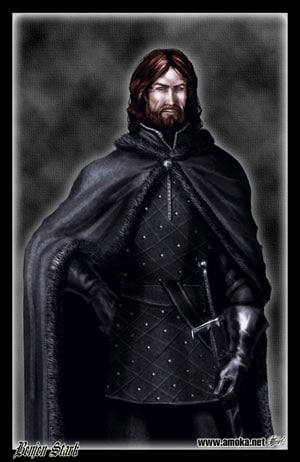
However, we also get a rare look at something which is driving Ned forward. He realizes that he was not meant to rule, not even meant to marry his wife. His elder brother Brandon, who was murdered by the Mad King, was meant to rule Winterfell and so he was never truly trained for politics and rule the way his brother would have been. It's clear that this haunts his decisions, thoughts, and actions. It is hard to grow up in a siblings shadow, but then being thrust into a position that that sibling was supposed to occupy and without a father to guide you is even worse!

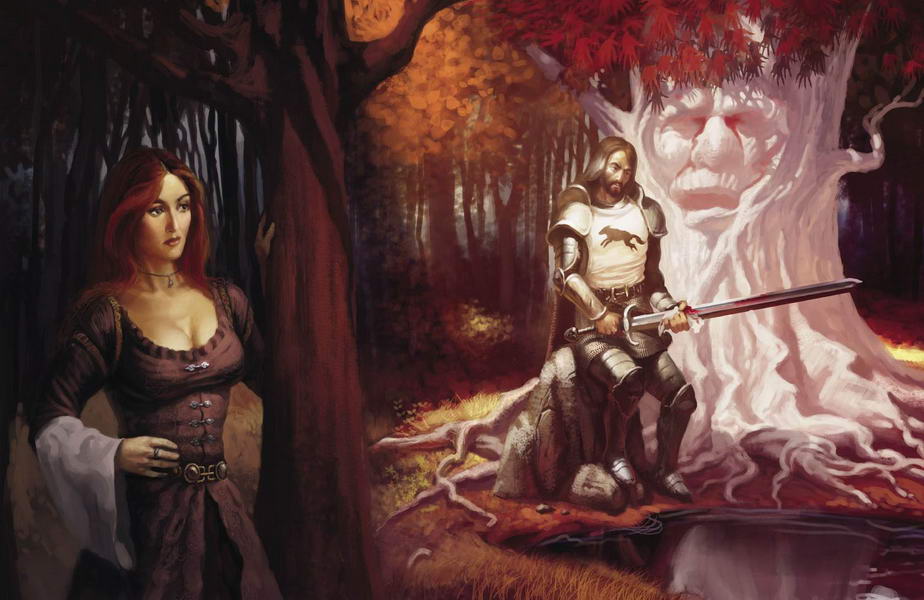
Brandon Stark, by Dejan_Delic


Ned had to do some quick growing up as a child, and he did much of that on the battlefield. It says something that Ned turned out the way he did really.

Thursday, 27 March 2014

Jon I

Well it took a month to get this rather short article out of the way but I promise more to make up for their absence!

WARNING SPOILERS FOR ALL BOOKS AHEAD

Synopsis:

A great feast is thrown for King Robert honoring his visit to Winterfell. Jon Snow gives us some insightful comments (in his opinion) on the character of all the guests and argues with his Uncle Benjen regarding joining the Night's Watch. Reflecting on his drunkenness and bastardy makes him angry so he leaves the hall only to engage with a good old fashioned chat with Tyrion.

What do we learn?:

Culture:

Culturally here we see something that really sets Westeros apart from many other fantasy realms, as well as our own history. That is, that bastards are an unwelcome presence in Westeros, fatherless, nameless, and outcast. Sure Jon Snow doesn't offer the best example, but the fact that his presence 'may offer insult' to the royal family shows a great difference between this culture and ours.

There's another swift reminder about the still stratified nature of the Night's Watch when we see Ned's brother Benjen Stark come in dressed in all black finery and lordly outfitting. Compare that to the poor cloaks and evident poverty of the Watchmen we saw in the prologue and ask yourself whether they could afford to go to a feast dressed like that!

Other than the rather poignant fact about bastards we don't learn very much culturally here, but it's nice to see a feast scene with all the smoke flame and food described. This chapter doesn't have as much 'food porn' as we see in other feast scenes (where often the good food offsets the horrible tribulations of the characters) but you still just feel the merry times and can almost taste the honey chicken!


Political:

Unfortunately we don't get lot's of political detail here. We do get a look at the leading alliance of Houses, Those of Baratheon and Lannister, but not very many important political details are brought up.


Character:

Well as far as character chapters go this is a gold mine! We get introduced to almost every major player in the novel son the Lannister side (we've already met all the Starks) running the gambit from Cersei, Jaime, Tyrion, Joffery, Tommen, and Myrcella and get some insightful character bits from Jon.

This is really the introductory chapter for old Jon Snow and we get to see his character shine here (though his perception skills will somewhat suffer as the series goes on). Jon offers some great insight into the major characters and even gives us some lovely young lads misconceptions of the world.

For instance, he sees through Cersei's false smiles and courtesies, seeing how she doesn't respect Ned and seems unhappy to be there. He then notes how Myrcella has a tiny crush on his older brother while watching with dismay at the height Joffery has and seeing him as the spitting image of his mother (hint, hint). Then he finds himself dismayed at King Robert's appearance, fat, drunk, and half out of his cups he looks nothing like the man Ned has built him up to be in his tales and nothing of what a king ought to look like. Then he see's Jaime and thinks that his proud visage is what a king should look like. Regal, beautiful, and owning his stylish clothes this is what a king should be in his mind!

Then he sees Tyrion and notes how this stunted dwarf is everything that Jaime and Cersei are not. Stunted, misshapen, and hideous he is the opposite of what his beautiful brother and sister are.

Their conversation outside the hall is just beautiful, Tyrion sees the bastard of Winterfell and sympathises with him over their shared nature of being outcast. While Tyrion may be the scion of a Great House he is an outcast for his deformities and faces prejudice for being ugly. This was a very real prejudice in our time as well as people would often conflate beauty with goodness and ugliness with evil. As time will go on we shall see Martin subvert this trope beautifully.

We also get a look at Ned's younger brother Benjen. He's clearly as much a man of honor as Lord Stark is and has clearly joined the Night's Watch out of a sense of duty and honor. He is a man who chooses not to bullshit Jon about the hardships and sacrifices of the Night's Watch. He tells the hard truth and won't let Jon rush into a rash decision. He is also a man who seems to not feel the constrains of falling into regular social norms as he embraces Jon as though he were a true son of House Stark.

Credit to Amoka


Finally we get Jon himself. Jon is young, impetuous, and full of piss and vinegar. He has never been drunk before and decides to take the opportunity to indulge himself. He is wise, that much is evident, but for all that wisdom he is still a child prone to making childish mistakes, especially those of young adults with more courage and sense. All in all he is a young man like any other, maybe a bit wiser due to his circumstances but still a young man.

He is self aware of his station too, and he knows that he will never rise above his station to be more than that, he won't lead great armies or rule a holdfast or marry into great families, he has no right of inheritance and he doesn't even know who his mother is. This makes him very well aware of what he would be doing to a child of his own and he gets quite emotional at the thought of fathering a bastard.

I also think its wonderful he doesn't have to be an unrealistic stoic and he actually cries when Benjen unknowingly besmirches his honor and sensibilities. This here is Martin's signature style of well rounded characters with good goals and motivations, not to mention flaws which run the story!

Historical:

Well I've already mentioned the historical aspects of the story with the comparison to Westeros's bastardy and our own. I think it's worth leaving off on discussing it further until I can do a proper essay on the subject to examine it in more depth.

Otherwise I've really exhausted all the major analysis I can do for this chapter, it is a character building chapter after all!

Thursday, 27 February 2014

Eddard I

WARNING SPOILERS FOR ALL BOOKS AHEAD:

Synopsis: Here we finally get a look inside the head of the Lord of Winterfell himself. This is Eddard's first chapter and don't worry, we'll be having a look at him for a long time to come. Here we are introduced to a whole host of characters Lannister and all, we also finally get a look at King Robert Baratheon. Robert makes some courtesy calls, visits the grave of his dead love, and against Ned Starks wishes appoints him Hand of the King.


What do we learn?:

Culture:

Well I can't say we learn much more culturally here than we did in other chapters but there are some interesting insights. On the one hand we have yet another look at just how different the North is from the many Southern realms, what with Ned's talk of little humor in the North and his dutiful attitude and talk of honor.

We also see some of the ancient glory of House Stark. There is a great crypt beneath Winterfell where all the Lords (and Kings) of Winter lay to rest. Clearly these are old crypts which stretch back hundreds of years as we see some of the earliest Kings of Winter sitting on their thrones with swords in hand and wolves at their feet. It's interesting that they have the iron swords placed upon their graves in order to keep their spirits locked inside (Which Ned humorously reflects is a good thing since the original lords of Winterfell were harsh men who styled themselves King in the North, which implied they were the ones who conquered all the North quite brutally).

The description of the South in summer is also one which is in stark comparison to the North, one of ripe harvests, rich wines, lush fields, and bustling trade and economy. The North on the other hand is subject to summer snows, vast empty territories, and a dour and serious people who do what they have to in order to survive.

All in all rather cheerful.

As an extra note I'm mildly amused to discover I had forgotten that phrases like "The Others take him" are considered swear words or curses. It really goes to show how the supposedly legendary threat of the Others really pervades the culture of Westeros, and for all the men of the modern day scoff at the idea of them existing, the cultural memory of the Others and their invasion is deeply ingrained into the Westerosi psyche.

Political:

Thankfully unlike the last chapter, this one is fairly meaty with some lovely political details, especially in light of the death of Jon Arryn.

I haven't talked much about the Warden system of Westeros (outside my one essay of course) but here I might as well bring it up since it is an important point. The title of Warden is purely military and even as Ned points out "In peace the title is only an honor." However we also learn that it is one which is almost hereditary, and removing that title would evidently be something which might offer an affront to a noble house "the title comes with the domain" suggesting that is has been centuries since the honor/duties of Warden were transferred from a Great House. It's even a part of Ned's official title.

Here though we see that Robert has a practical reason for considering shifting the title away from Robert Arryn, even though he is the head (in name at least) of House Arryn he is only a child, six and sickly to quote Robert directly, and a sickly child is no war leader so now he must find someone suitable to hold the title.

This could be a mild political affront to a House with as much history and honor as the Arryn's so Ned is probably right to suggest Robert tread carefully, but Robert's practical concern of potential invasions and potential internal turmoil (not to mention the mountain clans which seem to eternally plague the Vale) are quite valid and actually shows some good forethought for ruling on his part, as much as he complains about having to do it.

Mind you Lysa Arryn's flight from Kings Landing in the middle of the night may have irked Robert, and this is a man not above being petty, but here I think his concern is much more practical.

However, Robert also has a much more important position to fill, that of the Hand of the King. The Handship is a rather difficult office to explain but we have Ned lay out the full authority of the Hand in this chapter:

"The Hand of the King was the second-most powerful man in the Seven Kingdoms. He spoke with the king’s voice, commanded the king’s armies, drafted the king’s laws. Robert was offering him a responsibility as large as the realm itself."
This is a handy way to get a feel for the power of the Hand and what his duties are. Though as Robert points out, he is merely just giving the job of ruling the realm to Ned.


It's hard to define exactly what the Hand is, it's a very original office which seems to combine the roles of First Councilor and Prime Minister into a single office. He is given charge over the Small Council, given command of the King's Laws, and given control over the very power the King can wield himself (and it is implied only the king could overrule him if he made a proclamation). This is quite a prestigious honor and one which easily makes Ned one of the most powerful men in the Seven Kingdoms and easily enforces the Stark-Baratheon alliance, to say nothing of helping keep the Tullys and Arryn's in line. Couple this with Robert's marriage to Cersei Lannister which adds the wealthy and powerful House Lannister into the mix and you have a dynasty which should truly be able to stand the test of the centuries.

Ned's appointment should of course simply seal the Baratheon kingship into its new mantle as overlords of Westeros, but as we all know that isn't quite what happens.

Politically we also get a good look at the system of fostering which is prevalent throughout Westeros. We learn both Robert and Ned were fostered at the Eyrie under Jon Arryn and that Robert had plans to foster Robert Arryn at Casterly Rock in order to help cement cooperation between the Great Houses. Fostering is of course a valuable tool since it shows your trust in a fellow lord and how it can create great bonds between future heirs or members of the Great Houses.

Of course we also see the flip side where a ward can easily become a hostage, as is the case with Theon Greyjoy, who was taken in the aftermath of the failed Greyjoy Rebellion.

Character:

We get a good look here at the inner workings of both Ned Stark and Robert Baratheon, both two of the most powerful men in the Seven Kingdoms.

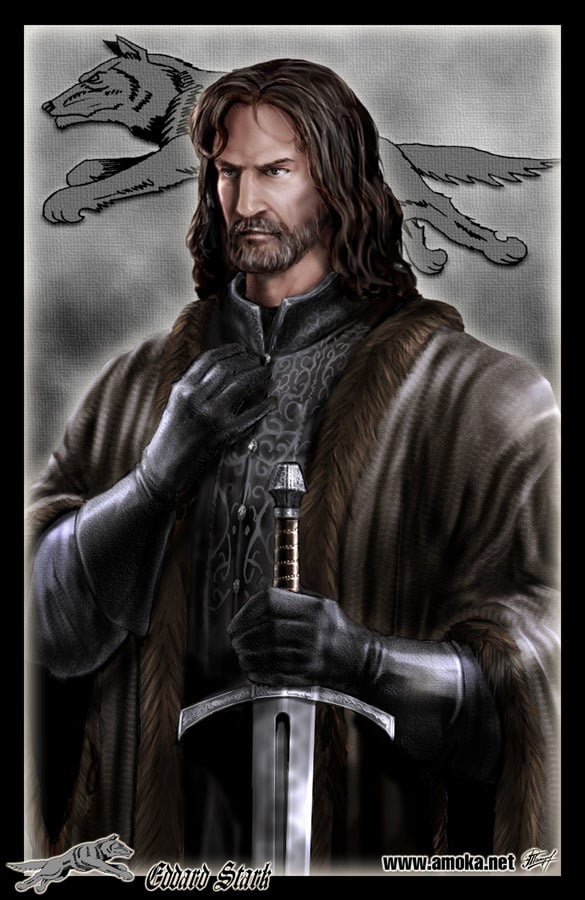
Credit to Amoka


First off let's take a look inside the head of the Lord of Winterfell. As shown previously Ned is an honorable man with a deep sense of duty to his people, his family, and his king. Seeing his interaction with Robert here is what truly shows us just how dutiful a man Eddard really is. He says things because it is expected of him and he treats Robert with the proper deference and distance as expected from a vassal to a liege lord.

Building up on this we really see that it isn't a face Ned puts on and he really is as honorable and family oriented as others make him out to be. We also see where these traits can be a fault. Rather than truly arguing with Robert he tries to humor his king, and rather than voicing any immediate doubts he goes to humor the man who he would be better off talking to purely as a friend.

However, he also seems to have a deep seeded, almost instinctual, distrust of the Lannisters after having dealt with Tywin's casual betrayal of Aerys during the rebellion, and Jaime's kingslaying. Then of course there is the matter of Tywin having the Targaryen heirs he could lay his hands on butchered by his knights. This leads to Ned's internal monologue mistrusting Tywin and thinking about how he'd rather trust a child with a pit viper.

While maybe not a major character flaw for mistrusting all things Lannister, it does mean he can take things a little too far in that mistrust as we will see later.

Now for our good friend and the King of the Seven Kingdoms, Robert Baratheon.

Despite what many say about Robert being a bad king (and believe me, he isn't a good one) he actually acquits himself well here, he is well aware of the practical military realities and even some of the political problems facing his rule (something he does consistently show) but I think what I said above is true above all. Robert is well aware of the military problems the kingdom faces, but he is not incredibly astute at the art of politics.

Sure his cheerful and amiable personality wins him fast friends and even cows some of his enemies, but he is not well suited to playing the game of thrones. Truly it was Jon Arryn who ran the kingdom despite the troubles placed upon it by Robert.

Here though we see that yes Robert is practical, but for all that he is stuck in the past. He spurns his queen (the link to an incredibly powerful house) and immediately goes to visit the grave of his long lost dead love, and while he is there he speaks angrily of killing Rhaegar at the Battle of the Trident. He speaks contemptuously of his time on the throne, and seems to detest it as much as any man can detest a job.

Credit to Abe Papakhian


However, that being said the man is self-aware of his problems, but he chooses to do nothing about it. He knows he is a poor king but he flits between hating the job and doing it with alarming regularity, one minute with Ned he is all chummy and contemptuous of the throne, the next he is using his power like a weapon to bully Ned into seeing things his way. Robert is clearly a man who doesn't quite know what to do with the power he wields, and as time will show, is clearly one who never wanted it in the first place.

History:

Well I could offer you a historical analysis about fostering, wards and hostages, but I think I can speak more about that later. For now let's talk about something from Westeros's history which I think demonstrates just how decent Robert was as king.

This of course all relates back to Eddard's ward, Theon Greyjoy.

I am of course referring to the Greyjoy Rebellion which is mentioned in this chapter and I'm hoping to use it to underscore a point about Robert's personality.

First some background for those who are unaware of the whole story here. The Greyjoy Rebellion was a revolt insitigated when the ever enterprising Balon Greyjoy crowned himself King of the Iron Islands. His thinking was that Robert was a new king, and he would never be able to rally the support of the Great Houses like a Targaryen king could have, he also believed he held the edge over Robert at sea.

Unfortunately Greyjoy miscalculated.

His revolt took place a full six years after Robert had seated himself upon the throne, plenty of time for Robert to pardon enemies and solidify alliances, which in turn left Balon alone to fight against the strength of every Great House save Dorne.

Balon's fleets were crushed by Stannis and his castle was besieged and stormed by Robert who swiftly de-crowned the so-called King of the Iron Islands. Balon again bent the knee.


There are two things which can be taken away from this, one is that as Ned had pointed out, several years ago Robert had still been much the same man, a warrior and a leader despite six years on the throne, and it showed that Robert was still in his prime, strong, capable, and intelligent. The second is that it shows Robert's surprising penchant for clemency. Though I doubt he was following Tywin's ideas he is clearly living by Tywin's maxim of:

"When your enemies defy you, you must serve them steel and fire. When they go to their knees, however, you must help them back to their feet. Elsewise no man will ever bend the knee to you."
This of course is how Robert managed to win the kingdom in the first place. He was merciful to his enemies, but swift to punish those who disobeyed him. Instead of engaging in wholesale slaughter of rebels he pardoned them and worked to integrate them back into the kingdom.

This is Robert in his prime, this is Robert with sound advise, and this is when Robert was still doing his best to keep the throne, but as his physical appearance and haunted eyes point out, that Robert has long since changed.

Friday, 7 February 2014

Daenerys I

WARNING SPOILERS FOR ALL BOOKS AHEAD

Synopsis: Across the Narrow Sea we meet Daenerys Targaryen, second last child of the Mad King Aerys. She is currently residing in Pentos with her brother Viserys who is the heir to the Targaryen dynasty under the care of the scheming Illyrio Mopatis. Here we learn firstly that Daenerys and her brother were whisked away on the eve of the fall of their families ancestral stronghold in the aftermath of the past civil war and fled to the Free Cities under the care of Sir Willem Darry, a Targaryen loyalist who kept them safe and cared for them until he expired. Following that they were forced to roam the Free Cities as virtual beggars selling the last bits of their heritage to feed themselves and keep the company of the various merchant princes. Finally it seems Daenerys scheming brother will have his chance as Illyrio promises to connect him with an army led by the fearsome Dothraki leader Khal Drogo.

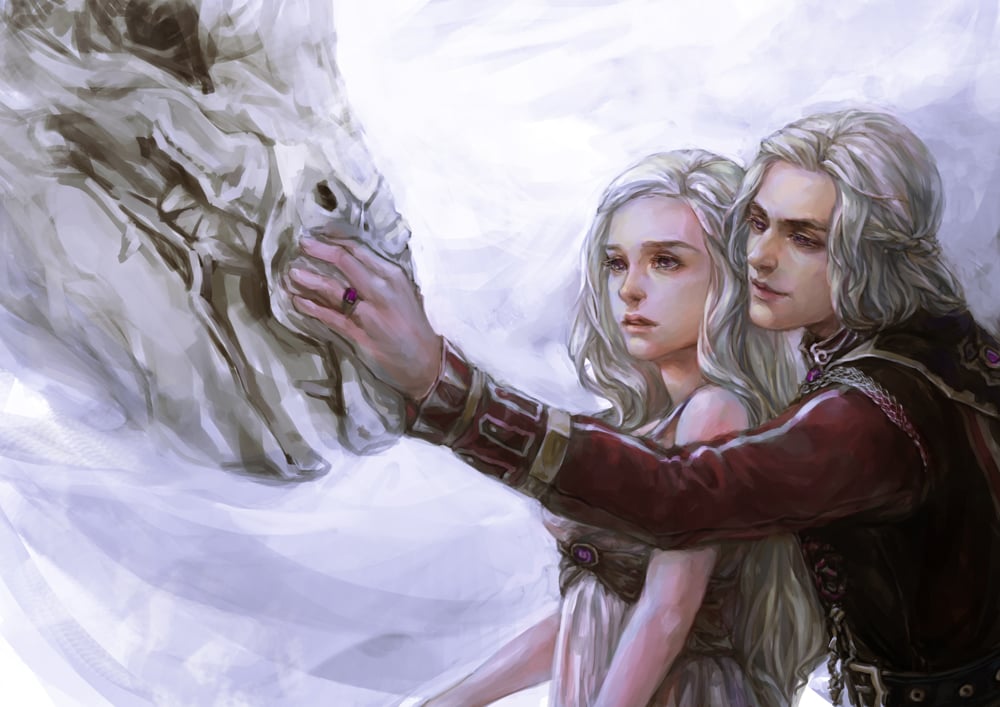
Credit to aprlilis 420


What do we learn?

Culture:

Well this chapter is not necessarily one which really indulges us in the culture of the Free Cities, it does give us a few important insights and one interesting comparison between ideas of slavery in Essos and those in Westeros.

Firstly a remark about slavery. In Essos it is plainly clear that the selling of people like chattel is commonplace. Slavery is seen as nothing to be remarked upon and as a clear continuation of the natural order of things. This is most likely inherited in the Free Cities from the slaving ways of the Valyrian Freehold, but more on them later.

Credit to Other in Law


We can get a clearer view of just how casual the state of slavery in the Free Cities is by Illyrio's remarks regarding Jorah Mormont's exile from Westeros:

"The Usurper wanted his head." Illyrio told them. "Some trifling affront. He sold some poachers to a Tyroshi slaver instead of giving them to the Night's Watch. Absurd law. A man should be able to do as he likes with his own chattel." 
This really speaks to the casual attitude that most have towards slavery in the Free Cities and one which is rather appalling to both our 21st century sensibilities and those of the Westerosi. It does help cement that there is a real divide between Westeros and the Free Cities, showing us the very different cultural background that each nation comes from.

We also get a look at the Dothraki that we don't get a look at again. It's an interesting and very often overlooked point of their personality and culture.

Here we see Khal Drogo in an expansive manse living it up like a rich Pentoshi merchant surrounded by political and economic figures from all over the Free Cities. He has men from all over in attendance at his lavish party and seems to be playing the part of a good host. Contrast this with his warrior persona from later in the novel and see just how much it contrasts with his very political appearance here.

If I'm being honest this always baffles me on read throughs since it is really never mentioned again. I mean we see his expansive manse in Vaes Dothrak but we don't really see him interacting with political figures and merchants like he's a great prince again. He almost seems to switch between his city persona and the persona of a fearsome khal. It's intriguing while at the same time mildly confusing.

Though there is a probably a good reason for this if we look at Dothraki culture over all, but its a point which is sadly never really elaborated upon, though we do get suggestions of having separate cultural lives.

Finally culture wise I have to say that this is some of the finest world building GRRM packs into a few paragraphs in a while. We see a completely different culture, attitudes, and religion neatly placed between the pages. It's an early establishment of those who worship R'Hillor and of the casual slavery of the Free Cities, all points which will come into play later on!

Political:

There is not too much to be gleaned politically here I'm afraid. Though there are a number of good notes to take.

One is that we see that Robert sits on the throne having taken it from Mad King Aerys (more on ideas about the legitimacy of that later) and here sit the last descendants of House Targaryen living in exile reminding us that there is another side to the civil war and its very human.

Credit to ntaq-d60jdwu (deviantart via Google)


The other note is the beggining of the long arc of Dany's story. Sold as a child to make way for a marriage alliance which will hopefully win Visery's back his throne. This is of course all a part of a massive Illyrio/Varys conspiracy (which I personally maintain is to put a Blackfyre pretended on the throne) and is arranged to further their ambitions (though more on this particular tid bit later). Based on some of Viserys words (and later information from the books) we do get a little insight how some of the Great Houses (like the Martells) and lesser Houses (like Darry) still maintain some loyalty to the old Targaryen dynasty. This of course may have much greater implications down the line.

Sadly we don't get a great look at the politics of the Free Cities (though it seems the Red Priests are even here being set up as a powerful religious/political force in Essos even here) but we do see one thing worth great note.

Like the barbarian hordes of old the Free Cities seem to find it far more preferable to pay off the Dothraki khalasars than fight them. They basically ransom their cities rather than risk economically ruinous war between them and the khalasars, which to me is mildly interesting.

Character:

This chapter is nice and instructive really as it gives us our first true look at what Dany used to be. Now don't get me wrong yes this is how she is now but almost immediately after she begins some rather exponential character growth. This is truly the first and last time we see the meek and bullied Dany who is always afraid of her brother and living in constant fear of his wrath and rather creepy sexual advances on her person. Afterwards she is a woman who is growing and getting used to power.

Quite honestly aside from Sansa I think Dany has probably the most prolific character growth in AGOT.

Now looking at Viserys we can see that he is in truth little more than an entitled and bitter man. His throne which he had been promised at a young age is stolen from him by rebels and usurpers, his family murdered, and all he had stolen from him as he is forced to live as a fugitive on the run from assassins. Due to this (and the death of his mother while birthing Dany) he is mean spirited, spiteful, vindictive, and has an inflated sense of self-worth to deal with the issues that lay before him.

In his head he paints a fantasy world where the people of Westeros await his return like that of a Messiah and he's been painting this picture in his head for so long that it has become reality, and anything that interferes with his reality is a burden and an enemy which needs to be cast down or aside. Nothing Dany says and none of the solid advise Illyrio gives is taken and he proves time and time again that he has to have things his way, even if that isn't realistic. He is paranoid of knives in the dark from the Usurper and is constantly running, his paranoia probably informs even more of his personality than his bitterness.

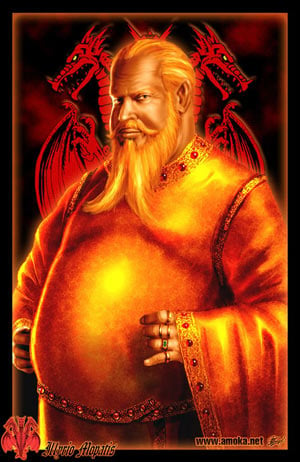
We don't get much of a look at Illyrio here because he hides any of his true nature behind a the facade of a boot licker and a flatterer who says sweet words to worm his way into the good graces of everyone he meets. Dany most likely sums it up best when she says:

"...she mistrusted Illyrio's sweet words, as she mistrusted everything about Illyrio."

That dear Dany is a good stance to take.

Credit to Amoka

There is also Ser Jorah Mormont, but we shall have a chance to get to know him much better as the series goes on.

Finally the last principle character we meet in this chapter is Khal Drogo, a great Dothraki khal commanding a khalasar 40,000 strong and is a man of both manses and silks and war and horses. I'll return more to him later though.

Historical:

There are many historical comparisons I could make here. Firstly I would probably compare the Free Cities themselves to the post-Roman cities throughout the Western Roman Empire in the long slow collapse of Roman authority, but more specifically you could probably compare them to the city states of Italy. I'll return more to this comparison later though since there is a much juicier world to look into.

Then we have a comparison for the Dothraki. The Huns spring to mind first and foremost, but the Dothraki have similar culture and status to everything from the Mongols to the Comanche. They're more of a stand in for the horse riding nomadic warrior cultures which haunted European memory all the way to 1200 with the aborted Mongol invasion.

Here in Pentos though we get big similarities to the Huns under Atilla as they rampaged across the Eastern Roman Empire. You see way back in 440 AD when the Western Roman Empire hadn't totally collapsed and the Eastern one was still on the rise Atilla and the Huns decided they wanted to open up Roman markets to Hunnish traders, they had arranged a treaty with Eastern Emperor Theodosius who had agreed to open markets and give the Huns tribute money in exchange for peace. When Theodosius reneged on this treaty in 441 to fight a war in Africa the Huns brought war to his doorstep. Sacking cities and forts they rampaged through the Balkans even making it to the great double walls of Constantinople, which they could not breach.

Having been defeated by the Huns in battle and with them rampaging with impunity outside his capital Theodosius was forced to pay a staggering sum of money in the form of 2000 pounds of gold with a yearly tribute being double to 2100 pounds of gold to keep the peace.


This still didn't stop Atilla from later returning and sacking his way through the Eastern Roman Empire in 450 and despite the fact he was defeated then he had to be paid off again.

Perhaps the Magisters of Pentos are on to something when they figure it's far cheaper to pay off the Dothraki than to fight them hmm?

Sunday, 26 January 2014

Catelyn I

WARNING SPOILERS FOR ALL BOOKS AHEAD

Synopsis: A relatively short chapter in which we are introduced to the Lady of Winterfell, Catelyn Stark (formerly Tully) who is Ned's wife. They briefly discuss matters of state, security, and family. We get a look into the decline of the Night's Watch from Eddard's perspective. We also see Catelyn's perspective of how different the North is. Importantly the news of the death of Jon Arryn reaches Winterfell, this of course sets off a series of plots, schemes, and counter-plots which will drive the entire story.

Credit to Thomas Denmark


What do we learn?

Culture:

Well culture wise we get some great exposition right off the bat from dear old Catelyn. She reflects on just how different the North is from the southern realms of Westeros, not just in culture, but even in religion. We know that Catelyn follows the Faith of the Seven while the hard men of the North follow the older, much less organized religion of the Old Gods. Here men sit in sacred godswood groves of weirwood and listen to the voices of the gods under the watchful eyes of the heart trees, old and brooding these trees symbolize the gods themselves.

We also learn that the Andals burned or chopped down the godswood groves and heart trees in a religious crusade to establish themselves as the dominant peoples when they arrived from across the Narrow Sea. It gives much more meaning to the idea that all the Northern customs and traditions have survived when we realize that they were persecuted vigorously by the arriving Andals. Like I mentioned previously it is a distinct culture in the North, one that has had to defend itself martially from southern invaders for centuries in order to maintain its identity. The blood of the First Men runs in the Starks indeed, and their commitment to the Old Gods is true and remembered rather than how the southern Houses perceive these relics from the First Men.

Catelyn herself reflects that even though the Great Houses each keep a godswood in their castles (out of tradition I would imagine) they are treated more like gardens and places of retreat and rest rather than as religious institutions or a spot to commune with the Old Gods. We see Ned sitting here in a sort of religious state where he cleans his blade in the cold waters beneath the heart tree.

The rites and practices of the Old Gods seem fairly simplistic, and if I'm being honest it's very hard to explain them vs. those of the Faith of the Seven. The worship of the Old Gods seems animistic and vaguely shamanistic (though probably more so under the Children of the Forest) and it seems to have very few rights of passage or formal religious observances other than apparently sticking to a code of honor and nobility and keeping the faith. We know that important prayers, oaths, and marriages are all said in the godswood before the heart tree.  All in all a very informal religion compared to the Faith or even the worship of R'hillor.

Once again we are shown just how culturally different the North is from the South, we even learn that there was no sept in Winterfell until Ned married Catelyn so its quite obvious that the Seven are not widely followed in the North and that their influence there is minimal at best.

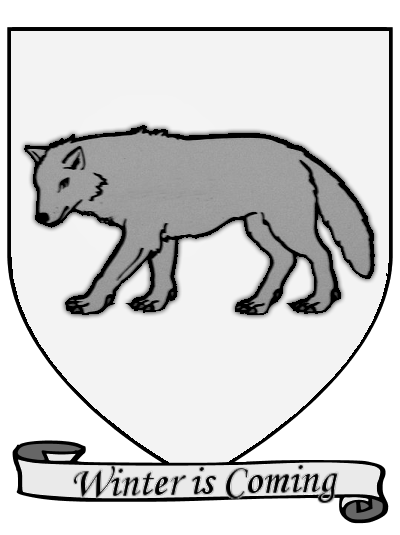
This chapter really does start to really emphasis the differences between north and south by even talking about the words of House Stark "Winter is Coming" which as compared to the flowery boastful words of many southern houses is merely a stark (ha!) warning of things to come. They are a dour and serious people always preparing for the dreaded winter which will creep upon them.


That is of course not to say they are above petty politics and feuding, as we will see later on.

We keep up the view of scary supernatural elements and omens with Catelyn being partial to them and Ned again not being so. It's really wonderful, I think, seeing effort put into the upkeep of the superstitious attitudes that people would hold to and how omens will indeed shape peoples actions in the story to come.

On a final cultural note we get a look at the Valyrian steel blade (Ice) that is the ancestral weapon of House Stark that Ned carries. These are hallmarks of a families wealth and heritage, echoes of a forgotten time when the Valyrian Freehold ruled the world, and swords forged with skill and magic never to be found again in this world. It is a curious thing that though these weapons are oft toted as great items of cultural importance we don't see them being given much significance after a time, but they may pop up as being important again.

Political/Military:

Though I should really split these into two parts the military matters here aren't necessarily separate so combining them into one section just makes more sense.

Militarily we get a good look at the decline of the Night's Watch and how it has greatly declined. The fact that it has fallen below the strength of one thousand men and is taking casualties on rangings it can little afford to replace is something that rightly troubles Ned (and makes the 300 men taken beyond the Wall in the so called 'Great Ranging' very problematic) who sees this as direct threat to the security of the North. He of course assumes this is the work of bold wildlings and their King-Beyond-the-Wall, Mance Rayder, who must intend to carry a great raid south and disrupt the North. Ned says he will have to consider calling his banners and riding out with the Night's Watch to confront the threat once and for all.

We also see that Ned's brother is in the Night's Watch and this to me indicates a sort of patronage on the part of the Stark's towards the Watch. Though that patronage must not be counting for enough since the Watch is so rapidly declining. It's gotten so bad that Ned has executed four deserters that year, which is apparently an unusually large number of men fleeing, and even Ned comments that the man he killed was mad with fear.

His resolution to do something, up to military action, shows he is a firm leader who takes the security of the realm very seriously.

However, this isn't the main political gist of the this chapter, it is the monumental news that Jon Arryn, a man who had been for all intents and purposes a second father to Ned, has died.

This isn't a small thing either. Jon Arryn was the man who knit Westeros together after Robert's Rebellion, a man who helped topple the ancient Targaryen dynasty, installed King Robert on the throne, smoothed the way for good relations with all the realm, and brought fifteen years of peace (with one minor Greyjoy inspired exception). I think the character of Jon and his meaning to Eddard can be summed up Catelyn says:

"Ned had fostered at the Eyrie, and the childless Lord Arryn had become a second father to him and his fellow ward, Robert Baratheon. When the Mad King Aerys II Targaryen had demanded their heads, the Lord of the Eyrie had raised his moon and falcon banners in revolt rather than give up those he had pledged to protect."
It speaks much to Jon Arryn's character (and the words of his House) that he would risk all he had to protect his wards and rise against a man who was his rightful overlord. Though of course it may have been about more than defending his charges, but that is for another time.

What is important here though is that the Hand of the King has died, and now Robert and his court come to the North to greet Robb and for them to grieve mutually over the death of their beloved mentor. Of course there is more to this than a mere friendly get together as kings seldom travel far without an ulterior motive. More on this another time though as it will become the dominant theme of later chapters, and indeed the dominant aspect of Ned and Robert's relationship for the time being.

Politically we also see the enmity between Ned and the Lannisters. This is because they came late to the cause and when they did it was in a spectacularly bloody fashion. Ned is not fond of Queen Cersei or her entire family really, something which can be clearly seen when he sours at the mention of the Queen's brothers, Jaime and Tyrion. Though we will see later that it is for her twin brother and her father than he bears the most distaste.

Character:

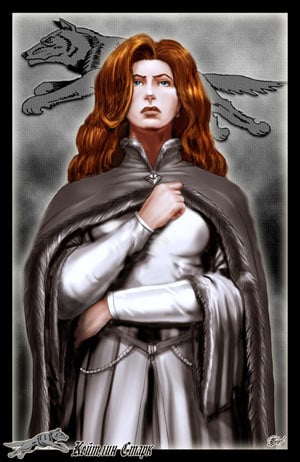
Though I'll admit I'm one of the many people who are disdainful of Catelyn Stark (and especially the key role she plays in kicking off the War of the Five Kings) she actually is a good woman and much of her character is wise and well written. She is a dutiful wife, mother, and sister since she not only worries for her husband and her children but her sister who has so suddenly been widowed.

She also shows that she is a true Tully and a brave woman. Though she is clearly uncomfortable in the North and finds the culture of the northmen odd and somewhat strange she has grown accustomed to it and even braves the unsettling godswood to meet her husband.

We will get to see her character shine as the books go on and we will also see how contrary to many people's beliefs she isn't an irrational idiot, but a fairly keen and observant political actor.

Credit to Amoka


Here we also get to see a more nuanced look at Lord Stark's character. He is obviously a spiritual man as he has come to the godswood to cleanse himself and his blade after killing a man. We see he is a good friend and a man who has lost much.

We also see though, for everyone who believes him to be a paragon, that he does hold grudges. He dislikes the Lannisters (admittedly not without good reason) but he can't see beyond past offenses and is unwilling to take growth of character into account and nor does he forgive easily it would seem. This will play a big role in his dealings with his old friend Robert where he has to war between seeing the man he wants to see and the man his friend has become.

History:

Here we get an interesting look at Northern politics and I've got an apt historical analysis to make. The Northern houses are positioned along the Wall and Ned's reaction to the loss of strength of the Night's Watch is a very militaristic and apt one.

Though the comparison is not perfect the way Ned reacts makes me think very much of the English marcher lords who sat on the Welsh border in order to protect the land from Welsh raids, and eventually to govern that wild and oft rebellious realm. The marcher lords had broad powers of justice, the ability to raise armies and declare war, as well as the right to establish castle towns! These were all rights which were otherwise vested only with the king. It sits well with Ned's status as Lord Paramount of the North and as the Warden of the North who is a supreme military commander.

The sort of counter raiding strategy many more northerly Houses must adopt and the militant mentality they keep because of it also echoes much like those English lord's sitting on the Scottish border, and the border earls grew quite powerful in their own right and were militarily formidable. Mind you the comparison is not totally spot on, House Umber is a spot for spot of the House of Percy. The analogy still sticks in a way though seeing how the North is very Scottish/North England in character.

Though in this case the wildlings are more like Braveheart's version of Scots vs. historical Scots. Though Braveheart's weird emphasis on freedom does ring true to the wildings beliefs on freedom, just not a freedom we in the 21st century would be incredibly comfortable with! Maybe I'll come back to this comparison later.

Well next time we ourselves will cross the Narrow Sea and link up with a wholly new character and locale!

Bran I

WARNING SPOILERS FOR ALL BOOKS AHEAD

Synopsis: Bran, one of the younger sons of the Lord of Winterfell is present at the execution of a deserter of the Night's Watch, something which tragically ties up the tale of those poor Rangers and their meeting with the Others. There he see's his father do justice and it is explained to him why Ned had to kill the man himself. On their return journey to Winterfell they come across a troubling sign, a direwolf south of the Wall and with it just enough pups for the Stark children. Even one for the bastard Jon Snow.

Credit to Mark Evans


What do we learn?

There are of course a number of things we can pick up on here, for convenience sake I shall break them down into their relevant categories.

Cultural:

This chapter is very interesting because it establishes almost immediately off the bat that the North is almost a cultural entity unto itself. We know of course from Westeros history that the North is both ethnically and culturally different from the southern realms with the culture of the First Men standing out in stark contrast to that of the Andals. Their customs, ideas, and traditions have survived countless attempts at integration into the southern realms and the Kings of Winter turned back countless Andal armies seeking to crush the last vestiges of the original culture of Westeros, it wasn't until dragons came that the last kingdom of the First Men finally joined the realm.

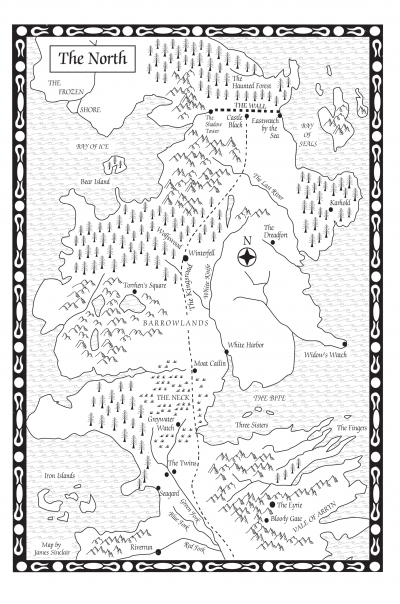
The great North, one of the Seven Kingdoms


Mind you this is established in a far more subtle way in this chapter. Here it's just shown as an act where the Lord of Winterfell believes that every man who passes the sentence should swing the sword, otherwise he loses sight of what it means to kill.

Philosophically this is a very noble tradition, and as Eddard points out, if a man has a headsman or someone to commit violence/justice on his behalf he soon loses any scope of what life or death means, even the concept of justice then becomes an abstract notion merely whim to the fancy of a monarch and not a hard decision which must be weighed according to the judge's conscience. Eddard here is unique as he acts as judge, jury, and executioner, though all in King Robert's name. More on that later.

This chapter also gives us a wee glimpse into the psyche of the Northmen who live there, even if only from the point of view of a nine year old lordling. However, he is seen here wondering after the wildlings, savage barbarians from beyond the Wall who come raiding and killing as they please, with only the Night's Watch, and eventually the Northern lords to stop them.

It gives us a good look at just how the wildlings are viewed south of the Wall. They are probably viewed in a more similar light to how the Chinese would have seen the barbarian riders from beyond the Great Wall than how the Romans would have seen Pictish tribesmen from beyond Hadrian's Wall. The culture differences between the two societies is interesting and will be fascinating to explore more in depth later on.

On a broader note we also get to see how contrary to some authors, GRRM keeps his medieval style peoples very much into omens and ill signs, much like people in our world would have been. The muttering about bad signs from the dire wolf, and the even worse sign of the stag's antler stuck in its throat is ominous for any reader, if they can pick up on it for their first read through.

Finally though we get our first look at the Night's Watch through the eyes of someone who isn't of the Night's Watch, a boy brought up on tales of the Others, giants, and wildlings, all the mysterious beings from beyond the Wall. Though beside that it is obvious he has been raised on tales of how the Night's Watch is a gallant organization, one which protects the realm. This will play an important part later on in the beginning of the series.

Lastly a brief word on deserters. Here we have the great quote from Lord Eddard Stark on deserters saying:

 "In truth the man was an oathbreaker, a deserter from the Night's Watch. No man is more dangerous. The deserter knows his life is forfeit if he is caught, so he will not flinch from any crime no matter how vile."

There is of course wisdom in this and shows that Eddard knows of what he speaks when he muses on the nature of oathbreakers and deserters. We will be coming back to this train of thought quite a few times throughout the books and I encourage readers to ruminate on these words well.

Political:

One could be forgiven for thinking that there isn't much political about this chapter, but they would be incorrect. Right near the start we see some fascinating political developments in the forefront.

Firstly we get a glimpse at the power and responsibilities of the Lord Paramount of the North. It is clear that he is acting in the name of his King as when he goes to proclaim justice he invokes the name of the King with his full title. He also invokes his own authority as the Lord of Winterfell and the Warden of the North. Now we know that invoking the authority of the Warden of the North is meaningless since it is a purely military title with no other authority, but it is important to see he invokes his authority as Lord of Winterfell and as a Stark.

We can understand that the Starks have been overlords of the North for millennium (due in no small part to the strategic placement of Winterfell) and that the name Stark itself carries weight and authority in the North with great connotations. As Lord of Winterfell Eddard is expected to carry out the King's justice, defend his portion of the realm, and govern it as he sees fit. This is of course all subject to the laws of the realm set forth by Robert the king. Though as we will see later, the various feudal lords of Westeros have plenty of autonomy when it comes to dealing with things within their own domains.

Something that I think is often missed upon first reading is that the location of the execution and Eddard's words to Bran later show us something fascinating about feudal politics here. The holdfast that the execution is carried out in flies the banner of the Starks. This suggests either a) the banner was placed up to show Lord Eddard was in attendance, or b) that this is a holdfast held directly by the Starks and ruled from Winterfell.

I am more inclined to believe scenario b) based on Eddard's words to Bran here:

"One day, Bran, you will be Robb's bannerman, holding a keep of your own for your brother and your king,"
I am inclined by this then to believe that this is a holdfast on a piece of land which is garrisoned or kept up by Stark retainers in service to their liege waiting for the day when a Stark heir will take his place as rightful lord of those lands and its attendant keep, where he will raise goods and swords for his brother and liege lord.

As looks into the feudal nature of the Seven Kingdom's go it is interesting, suggesting that at least some of the Great Houses hold tracts of land in trust for their heirs to help prevent wandering lords or dissension amongst their children, seeing that each is in some way compensated in land, which is only fitting for a person of their station.

Character:

As this is an early chapter it does show us some good first glimpses into the nature of the Stark boys, Eddard Stark, and his ward, Theon Greyjoy.

Since this is from the POV of Bran I may as well start with him, he is shown as being like any typical nine year old boy, afire with curiosity about the world and sitting in the shadow of his father and trying to live up to his expectations. Then of course he lives in the shadow of his brothers, even his half brother Jon Snow who is technically lesser than him in the social order, but is still regarded as a brother anyways.

Jon and Robb are shown as close, though we will later learn of course that rather than feel like brothers they are more like good friends since Jon is well aware of his bastard status and Robb is more outgoing and aggressive than his half brother. Like any young boy Robb is always up to no good and eager to speed along in life. We'll be getting a much better feel for these two as the series goes on.

Theon is also a character who we'll get more of a feel for but its interesting to see a few things. One is that despite being for all intents and purposes a hostage, Lord Eddard treats him as, essentially, an equal to his sons, he is allowed to accompany them on matters of the kings justice, see the authority of the Lord of Winterfell carried out, carry weapons, and ride amongst the noble party as an equal. He is not well liked however, and Jon mutters that he is an ass and a bloody minded boy, arrogant and quick to laugh. We can in fact tell that Jon doesn't like him very early on, the other Starks though are far more accepting of him.

Finally we get Lord Eddard Stark himself. From the POV of Bran we see a mighty and imposing man, one who has dual personalities which Bran refers to as 'Father' and 'The Lord of Winterfell' showing us that Eddard takes both his responsibilities as the head of House Stark, and the Lord of the North seriously, but handles them with a different personality. As a father he is a concerned, caring, and deeply emotional man, but as the Lord of the North he is a stern, hard, and dutiful man who works hard to do his duty.

Contrary to what many believe about Ned being stupid, he is actually a smart, decisive and fairly skilled political actor. As the review goes on I plan to show how events (and GRRM) conspired against him in the Game of Thrones and that while he was a great player who was bound by honor, he did indeed make mistakes but never lost because of it, but rather, in spite of it.

However, more on that another time.

General:

Well here we see the end of our poor friend Gared. Clearly driven mad by the events he witnessed on his ranging, the ranger simply ran blind with fear from the otherworldly menace that was the Others and attempted to get as far away as possible.

We also once again get a beautiful point of dramatic irony as Bran is curious and even a bit eager to believe the fantastic stories from beyond the Wall, but his elders who are more level headed (tragically) are disinclined to believe in such fanciful tales.

Yet another wonderful interaction with the meta-plot of the series is the finding of the direwolf and her cubs. This is once more a very fleeting glimpse into the fantastical elements of the series with the direwolf just happening to perish in a place where the pups can be found by children who all just happen to have inherited warging abilities.

The cool meta-plot material here is clearly showing us that something is stirring beyond the Wall and even though one force is evil, another force which is good (or 'good' in the sense that the Old Gods/Greenseers are at least opposed to the life destroying will of the Others) is attempting to push back and set up a way for them to be defeated.

How this is to be is of course left to our imaginations but I have thoughts of my own on the subject I may share later on in this series.

As another aside I feel compelled to end the analysis by praising the way that the TV show handled this scene. It captured the character of Eddard Stark and his children well and did a wonderful job of showing us both the unfairness of the Seven Kingdoms, and how hard the North is.

For your consideration: