Showing posts with label Catelyn. Show all posts

Tuesday, 15 April 2014

Catelyn II

WARNING SPOILERS FOR ALL BOOKS AHEAD:

Synopsis:

In our first repeat chapter of the book we have another good character piece from Catelyn as well as the take off of the conspiracy which will drive the novels and leave some very pertinent unanswered questions. Catelyn and Ned finish lovemaking only for Maester Luwin to arrive bearing an unknown message delivered to him in secret. It proves to be from Catelyn's sister Lysa. The message implicates the Queen in the murder of Jon Arryn. Ned, who had been about to refuse the Handship is forced by his wife (and maester's) counsel to take it in order to solve the murder of his old mentor. Finally the question of where the children will go is settled, much to the pain of both parents.

What do we learn?:

Culture:

Here we get some interesting insights into the nature of bastards in Westeros. I won't comment much more since I'm saving my thoughts on that for another essay. Here though it's interesting that bastards are seen as outside the line of succession whereas in our time bastards could easily make viable candidates for the throne. The reasons for bastards being socially unacceptable here aren't immediately clear (as Catelyn even mentions that Jon's children could challenge her grandchildren for Winterfell) but seems to have more to do with the pride and emphasis on pure blood lines of the Great Houses versus any real social concerns that might impede a bastard from taking his place amongst the families of the noble houses.

Here also is our first look at the maesters, the intellectual elite of Westerosi society. The maesters are the scholars, healers, librarians, teachers, postmen, and general intelligentsia of Westeros. They do not hold a monopoly on knowledge, but they seem to be the established and entrenched, and accepted order of teachers and the holders of knowledge.

The role in which we see maester Luwin is one part teacher, scholar, doctor, adviser, and spy/post master for the Lord of Winterfell. He helps deliver the Lord's children, advises him in times of trouble, and even pursues his own studies part time. There are apparently only one maester at each castle, but he has servants which explains how he can carry out such a myriad of duties.
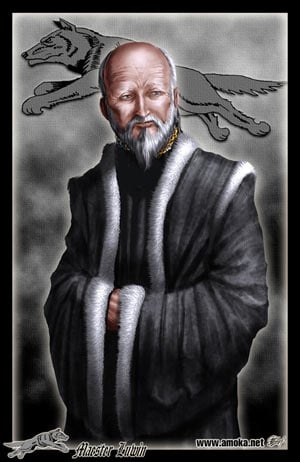
Credit to Amoka


There is really no real world analogy to the maesters of Westeros, they serve in a role that monks did for many noble families in Europe and Japan, and they occupy the place of the scholars of the early and late Middle Ages, then of course they even occupy the role of doctor. It's a fascinating social category which fills a huge number of niches in Westerosi society. That gives the maesters order exceptional power, but as I've seen many argue, also retards progress as it traps learning and knowledge in the hands of one organization.

Something else interesting to note is the clear technical ingenuity displayed in the construction of Winterfell, the keep built over natural hot springs which provide warmth even in the depths of winter and even allow for maintaining greenhouses! It speaks of a sort of lost technology from ancient times, or at the very least that the builder of Winterfell was farsighted and must have been a prodigy of some sort.
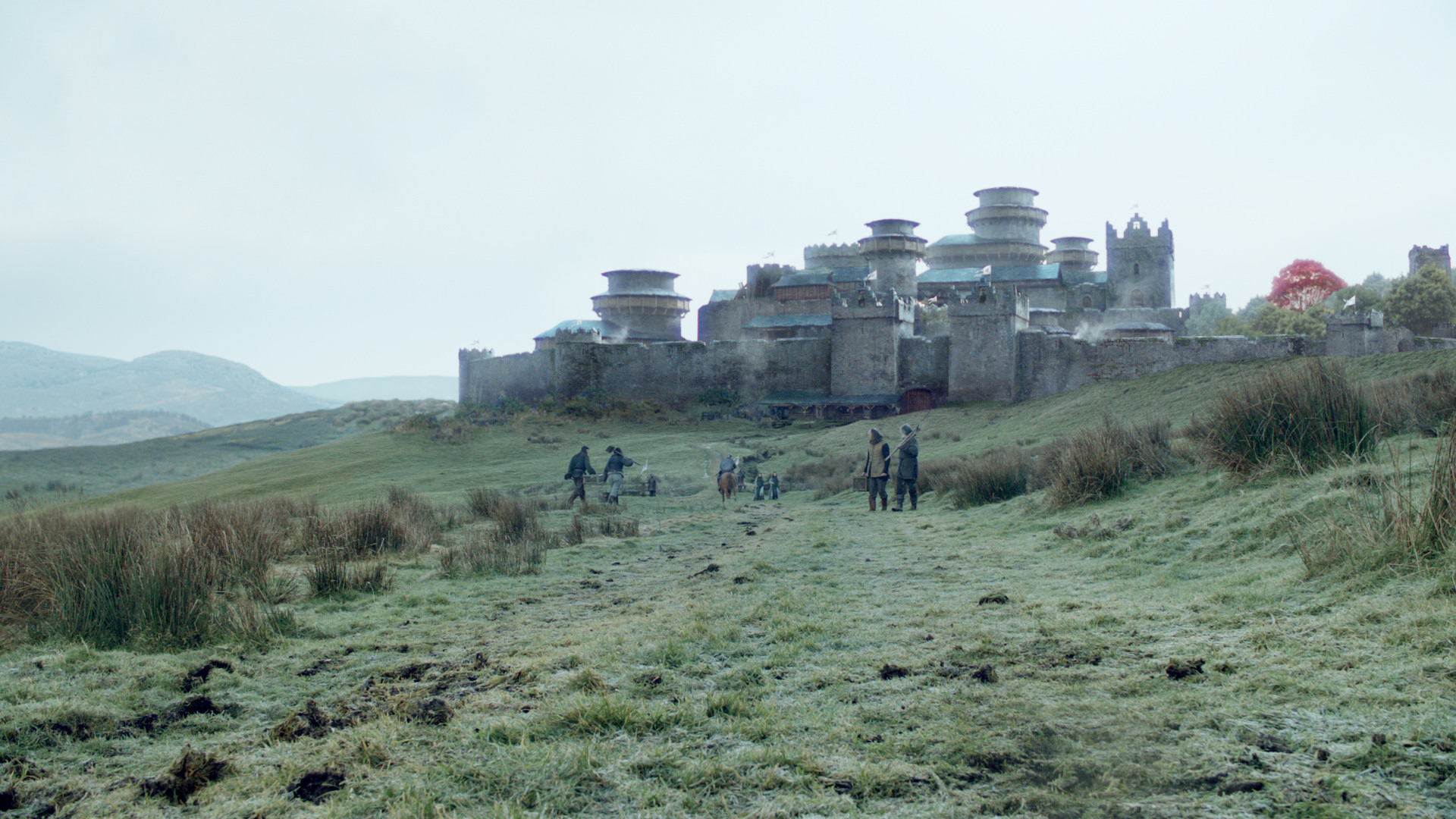
Winterfell, heart of the North.


Political:

Here we see some great feudal politics at work, and it even gets wound up in character interpretation.

Ned is considering refusing the position of Hand as he does not relish the idea of leaving his home and his family to run Robert's kingdom for him, and he has no stomach for the constant political infighting of the South. However, Catelyn wisely points out how Robert would feel denied and potentially become suspicious of Ned should he choose to reject what the king would see as a generous offer.

The interplay of vassal and lordly politics here is interesting as it does show how intrigues can begin from even the most innocuous events. Robert's sense of entitlement as king and Ned's simple desire to simply rule as Lord of Winterfell clash. It's also interesting how Ned's powers as Hand would allow him to have some measure of control over the other Houses and in how they answer to the Crown, which further emphasizes the burdens and responsibility Robert is placing on Ned by asking this of him.

However, we also see how Ned must begin divvying up his children for political gain. Robb, being his eldest and his heir, must stay in Winterfell and learn to rule in order to one day take his place as Lord of the North. This is just good sense as the heir must be safe and away from danger while being given good counsel and taught to rule well a justly. Thus it is Catelyn's place to stay behind and teach him. Rickon must also stay behind as he is too young to do much else.

Now Bran going along is an interesting choice. It is true he could help bridge the gap between Prince Joffery and the other Stark boys, but there is no real political purpose to his accompaniment of his father south. It could be of course that Ned simply wants one of his male children there looking out for the girls in times of trouble.

The two daughters of course, are even more self-explanatory. They are bargaining chips in the feudal game. While Sansa is already tied to Joffery to cement a new dynastic marriage Arya is young and a wildcard who could be used as a way to cement an alliance as well as to lure other lords in with promises of ties to a Great House. It's a dirty look into how even children are pawns in the game of thrones.

On the other side of the political coin, its clear that there is friction between the Lannisters, Baratheons, and Starks. The friction comes from what is clearly a loveless marriage between Robert and Cersei while the Starks simply mistrust the Lannisters due to Tywin's brutality during the rebellion. That this friction might have made its way into an outright murder of the king's last non-Lannister adviser (and Robert's right hand man) is something even the reluctant Ned cannot ignore.

Of course this is the opening moves of the far-sighted (if not intricately planned) game by Littlefinger to destabilize the realm in order to maneuver his way into power. This is one of the deeper intrigues of the series which deserves some in depth analysis. It's definitely not the opening move of the scheme (as Littlefinger first had to establish himself as a power broker in the capital) but it is one of the more important moves for the narrative of the whole plot of the series.

The genius of this move is self-evident. The Starks and Lannisters already dislike one another and it requires no real effort on Littlefinger's part, and similarly he has little risk of exposure as the Lannisters have little reason to out Littlefinger since Jaimie and Cersei have no reason to reveal their incestuous ways. It's a perfect web of coincidental interests which allow Littlefinger to advance his own schemes while allowing the two Lannister twins to keep their incestuous secret safe.

Now as to why each side benefits from the murder of Jon Arryn:

Littlefinger - Petry Baelish benefits from the death of Jon Arryn for two reasons, one is that the man who was for all intents and purposes running the realm is now dead. He can no longer represent an obstacle to Littlefinger's more long term plans.

It's also the nudge he needs to destabilize the kingdom so he can begin climbing the rungs of power. More on how risky portions of Littlefinger's plans are later.

The Lannisters - For Cersei and Jaimie it is simply a matter of  self-interest and survival. Jon Arryn was clearly growing suspicious of all of Robert's fair haired children and found himself (with Stannis) investigating the parentage of Robert's bastards. This of course would have exposed the actions of the Lannisters to the world, spelled their deaths, and brought great dishonor upon their House.

Killing Jon Arryn was just the way they would end up surviving this crisis.

Now this may explain some of the later collusion by the two groups (Cersei helping Littlefinger and Littlefinger doing his best to help Cersei's financial issues) but I personally believe that in the death of Jon Arryn it was more coincidental collusion rather than a joint scheme. More on that later though.

Character:

Not very much new character wise. We see Catelyn's dogged determination to be rid of her husbands bastard son and her fierce devotion to her family. We also see she is a practical woman and incredibly trusting.

However, we also get a rare look at something which is driving Ned forward. He realizes that he was not meant to rule, not even meant to marry his wife. His elder brother Brandon, who was murdered by the Mad King, was meant to rule Winterfell and so he was never truly trained for politics and rule the way his brother would have been. It's clear that this haunts his decisions, thoughts, and actions. It is hard to grow up in a siblings shadow, but then being thrust into a position that that sibling was supposed to occupy and without a father to guide you is even worse!

Brandon Stark, by Dejan_Delic


Ned had to do some quick growing up as a child, and he did much of that on the battlefield. It says something that Ned turned out the way he did really.

Sunday, 26 January 2014

Catelyn I

WARNING SPOILERS FOR ALL BOOKS AHEAD

Synopsis: A relatively short chapter in which we are introduced to the Lady of Winterfell, Catelyn Stark (formerly Tully) who is Ned's wife. They briefly discuss matters of state, security, and family. We get a look into the decline of the Night's Watch from Eddard's perspective. We also see Catelyn's perspective of how different the North is. Importantly the news of the death of Jon Arryn reaches Winterfell, this of course sets off a series of plots, schemes, and counter-plots which will drive the entire story.

Credit to Thomas Denmark


What do we learn?

Culture:

Well culture wise we get some great exposition right off the bat from dear old Catelyn. She reflects on just how different the North is from the southern realms of Westeros, not just in culture, but even in religion. We know that Catelyn follows the Faith of the Seven while the hard men of the North follow the older, much less organized religion of the Old Gods. Here men sit in sacred godswood groves of weirwood and listen to the voices of the gods under the watchful eyes of the heart trees, old and brooding these trees symbolize the gods themselves.

We also learn that the Andals burned or chopped down the godswood groves and heart trees in a religious crusade to establish themselves as the dominant peoples when they arrived from across the Narrow Sea. It gives much more meaning to the idea that all the Northern customs and traditions have survived when we realize that they were persecuted vigorously by the arriving Andals. Like I mentioned previously it is a distinct culture in the North, one that has had to defend itself martially from southern invaders for centuries in order to maintain its identity. The blood of the First Men runs in the Starks indeed, and their commitment to the Old Gods is true and remembered rather than how the southern Houses perceive these relics from the First Men.

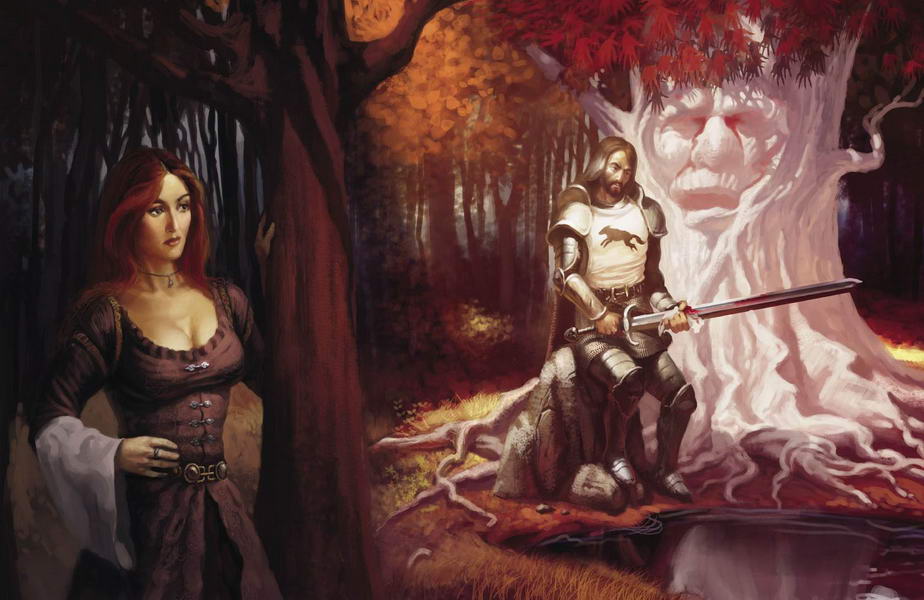
Catelyn herself reflects that even though the Great Houses each keep a godswood in their castles (out of tradition I would imagine) they are treated more like gardens and places of retreat and rest rather than as religious institutions or a spot to commune with the Old Gods. We see Ned sitting here in a sort of religious state where he cleans his blade in the cold waters beneath the heart tree.

The rites and practices of the Old Gods seem fairly simplistic, and if I'm being honest it's very hard to explain them vs. those of the Faith of the Seven. The worship of the Old Gods seems animistic and vaguely shamanistic (though probably more so under the Children of the Forest) and it seems to have very few rights of passage or formal religious observances other than apparently sticking to a code of honor and nobility and keeping the faith. We know that important prayers, oaths, and marriages are all said in the godswood before the heart tree.  All in all a very informal religion compared to the Faith or even the worship of R'hillor.

Once again we are shown just how culturally different the North is from the South, we even learn that there was no sept in Winterfell until Ned married Catelyn so its quite obvious that the Seven are not widely followed in the North and that their influence there is minimal at best.

This chapter really does start to really emphasis the differences between north and south by even talking about the words of House Stark "Winter is Coming" which as compared to the flowery boastful words of many southern houses is merely a stark (ha!) warning of things to come. They are a dour and serious people always preparing for the dreaded winter which will creep upon them.


That is of course not to say they are above petty politics and feuding, as we will see later on.

We keep up the view of scary supernatural elements and omens with Catelyn being partial to them and Ned again not being so. It's really wonderful, I think, seeing effort put into the upkeep of the superstitious attitudes that people would hold to and how omens will indeed shape peoples actions in the story to come.

On a final cultural note we get a look at the Valyrian steel blade (Ice) that is the ancestral weapon of House Stark that Ned carries. These are hallmarks of a families wealth and heritage, echoes of a forgotten time when the Valyrian Freehold ruled the world, and swords forged with skill and magic never to be found again in this world. It is a curious thing that though these weapons are oft toted as great items of cultural importance we don't see them being given much significance after a time, but they may pop up as being important again.

Political/Military:

Though I should really split these into two parts the military matters here aren't necessarily separate so combining them into one section just makes more sense.

Militarily we get a good look at the decline of the Night's Watch and how it has greatly declined. The fact that it has fallen below the strength of one thousand men and is taking casualties on rangings it can little afford to replace is something that rightly troubles Ned (and makes the 300 men taken beyond the Wall in the so called 'Great Ranging' very problematic) who sees this as direct threat to the security of the North. He of course assumes this is the work of bold wildlings and their King-Beyond-the-Wall, Mance Rayder, who must intend to carry a great raid south and disrupt the North. Ned says he will have to consider calling his banners and riding out with the Night's Watch to confront the threat once and for all.

We also see that Ned's brother is in the Night's Watch and this to me indicates a sort of patronage on the part of the Stark's towards the Watch. Though that patronage must not be counting for enough since the Watch is so rapidly declining. It's gotten so bad that Ned has executed four deserters that year, which is apparently an unusually large number of men fleeing, and even Ned comments that the man he killed was mad with fear.

His resolution to do something, up to military action, shows he is a firm leader who takes the security of the realm very seriously.

However, this isn't the main political gist of the this chapter, it is the monumental news that Jon Arryn, a man who had been for all intents and purposes a second father to Ned, has died.

This isn't a small thing either. Jon Arryn was the man who knit Westeros together after Robert's Rebellion, a man who helped topple the ancient Targaryen dynasty, installed King Robert on the throne, smoothed the way for good relations with all the realm, and brought fifteen years of peace (with one minor Greyjoy inspired exception). I think the character of Jon and his meaning to Eddard can be summed up Catelyn says:

"Ned had fostered at the Eyrie, and the childless Lord Arryn had become a second father to him and his fellow ward, Robert Baratheon. When the Mad King Aerys II Targaryen had demanded their heads, the Lord of the Eyrie had raised his moon and falcon banners in revolt rather than give up those he had pledged to protect."
It speaks much to Jon Arryn's character (and the words of his House) that he would risk all he had to protect his wards and rise against a man who was his rightful overlord. Though of course it may have been about more than defending his charges, but that is for another time.

What is important here though is that the Hand of the King has died, and now Robert and his court come to the North to greet Robb and for them to grieve mutually over the death of their beloved mentor. Of course there is more to this than a mere friendly get together as kings seldom travel far without an ulterior motive. More on this another time though as it will become the dominant theme of later chapters, and indeed the dominant aspect of Ned and Robert's relationship for the time being.

Politically we also see the enmity between Ned and the Lannisters. This is because they came late to the cause and when they did it was in a spectacularly bloody fashion. Ned is not fond of Queen Cersei or her entire family really, something which can be clearly seen when he sours at the mention of the Queen's brothers, Jaime and Tyrion. Though we will see later that it is for her twin brother and her father than he bears the most distaste.

Character:

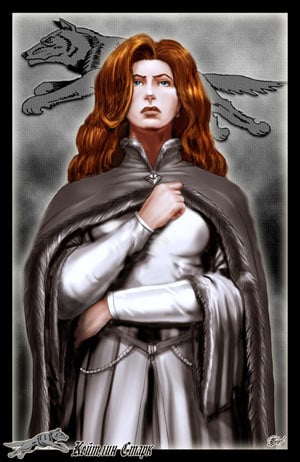
Though I'll admit I'm one of the many people who are disdainful of Catelyn Stark (and especially the key role she plays in kicking off the War of the Five Kings) she actually is a good woman and much of her character is wise and well written. She is a dutiful wife, mother, and sister since she not only worries for her husband and her children but her sister who has so suddenly been widowed.

She also shows that she is a true Tully and a brave woman. Though she is clearly uncomfortable in the North and finds the culture of the northmen odd and somewhat strange she has grown accustomed to it and even braves the unsettling godswood to meet her husband.

We will get to see her character shine as the books go on and we will also see how contrary to many people's beliefs she isn't an irrational idiot, but a fairly keen and observant political actor.

Credit to Amoka


Here we also get to see a more nuanced look at Lord Stark's character. He is obviously a spiritual man as he has come to the godswood to cleanse himself and his blade after killing a man. We see he is a good friend and a man who has lost much.

We also see though, for everyone who believes him to be a paragon, that he does hold grudges. He dislikes the Lannisters (admittedly not without good reason) but he can't see beyond past offenses and is unwilling to take growth of character into account and nor does he forgive easily it would seem. This will play a big role in his dealings with his old friend Robert where he has to war between seeing the man he wants to see and the man his friend has become.

History:

Here we get an interesting look at Northern politics and I've got an apt historical analysis to make. The Northern houses are positioned along the Wall and Ned's reaction to the loss of strength of the Night's Watch is a very militaristic and apt one.

Though the comparison is not perfect the way Ned reacts makes me think very much of the English marcher lords who sat on the Welsh border in order to protect the land from Welsh raids, and eventually to govern that wild and oft rebellious realm. The marcher lords had broad powers of justice, the ability to raise armies and declare war, as well as the right to establish castle towns! These were all rights which were otherwise vested only with the king. It sits well with Ned's status as Lord Paramount of the North and as the Warden of the North who is a supreme military commander.

The sort of counter raiding strategy many more northerly Houses must adopt and the militant mentality they keep because of it also echoes much like those English lord's sitting on the Scottish border, and the border earls grew quite powerful in their own right and were militarily formidable. Mind you the comparison is not totally spot on, House Umber is a spot for spot of the House of Percy. The analogy still sticks in a way though seeing how the North is very Scottish/North England in character.

Though in this case the wildlings are more like Braveheart's version of Scots vs. historical Scots. Though Braveheart's weird emphasis on freedom does ring true to the wildings beliefs on freedom, just not a freedom we in the 21st century would be incredibly comfortable with! Maybe I'll come back to this comparison later.

Well next time we ourselves will cross the Narrow Sea and link up with a wholly new character and locale!