Showing posts with label Politics. Show all posts

Thursday, 30 May 2019

Show Ends Book Ends Not the Same

This last Sunday was the first Sunday in quite a long time where people didn't get to hum along to the most catchy theme music in fantasy for a while. Yes, Game of Thrones has finally come to an end. What an end that was though. Wherever you stand on it, just let me get something out of the way;

The books will not end the same as the show. The idea that it will is sheer madness.

Since the very divisive ending of the show, it seems there has been something of an uptick in people speculating how close the show ending will come to the book ending. The short version is, not very close really, the longer version is below.


First however, let us get something out of the way, what does the author say about it. Well, GRRM on his Not a Blog website, says surprisingly little. Here is exactly what he said:
How will it all end? I hear people asking. The same ending as the show? Different? 
Well… yes. And no. And yes. And no. And yes. And no. And yes. 
I am working in a very different medium than David and Dan, never forget. They had six hours for this final season. I expect these last two books of mine will fill 3000 manuscript pages between them before I’m done… and if more pages and chapters and scenes are needed, I’ll add them. And of course the butterfly effect will be at work as well; those of you who follow this Not A Blog will know that I’ve been talking about that since season one. There are characters who never made it onto the screen at all, and others who died in the show but still live in the books… so if nothing else, the readers will learn what happened to Jeyne Poole, Lady Stoneheart, Penny and her pig, Skahaz Shavepate, Arianne Martell, Darkstar, Victarion Greyjoy, Ser Garlan the Gallant, Aegon VI, and a myriad of other characters both great and small that viewers of the show never had the chance to meet. And yes, there will be unicorns… of a sort… 
Book or show, which will be the “real” ending? It’s a silly question. How many children did Scarlett O’Hara have?
People have read a lot into this (especially the Scarlett O'Hara comment, it's 3 in the novel and 1 in the film in case you're wondering) and they really ought not to. For one thing, nowhere does he ever say this is the same ending, though he does say he will write it and we can read it, then the internet can argue about which is better. The author is also pointing out that they are both working in a vastly different medium, which means stories, plots and entire character arcs had to change to fit the particular medium of television and its limitations.

Two prime examples are those of Cersei and Arya.

With Cersei, I've briefly pointed out she is the Mad Queen we deserve, but her story in Game of Thrones is vastly different from her story in A Song of Ice and Fire. To be clear, the show essentially cuts her character off at the legs, flipping back and forth on what drives her, protecting her children or power (it settles on power) but in the books it's one thing. The valonqar prophecy of Maggie the Magi. This is the reason she hates Tyrion, this is why she hates other queens and this is why she is so hell bent on keeping her kids on the throne.

In Game of Thrones however, her goal is power, pure and simple. There isn't a really complex story line about loving her children (who she seems to miraculously forget about) or trying to tragically prevent a prophecy from coming true, it's merely about a woman winning power so she can never be hurt again. Then she dies in her lover/brother's arms.

The exclusion of the valonqar prophecy from the show makes for a dramatically different character arc and ending. The reason being is that it makes Show Cersei's demise less tragic and more sympathetic, despite the book Cersei not being a really sympathetic character who is not going to die tragically in the arms of her brother. If you're wondering about Cersei's eventual fate, just remember the words Tyrion spoke which have been rattling around in Jaime's head "she's been fucking Lancel and Osmund Kettleblack and probably Moon Boy for all I know" which he can't stop thinking about.

Is she pregnant? Possibly. Is it Jaime's? Who can say?

As for Arya's story line, well let's just say her odds of killing the book's non-existant Night King are pretty slim.

Beinhoff and Weiss, famously dismissive of things like themes, have missed the point of Arya's character arc. Since the first book of the series Arya's arc has all shifted around themes of vengeance and identity. Ever since the Hound killed Micah she has been fixated on revenge, but in her quest for revenge she has also begun to lose her identity as a Stark. Her only real link back to her family is with the show's oft overlooked warging abilities in the Starks and to her direwolf Nymeria, who the show has also forgotten. Her story will be about remembering who she is, something the Faceless Men are currently attempting to make sure she forgets, though not very well as seen in her Winds of Winter Chapter.

The one beat the show probably gets right is her murder of Walder Frey, however, it misses the bigger point of that story since the show omitted Lady Stoneheart. The other side of the coin in Arya's character arc is her quest for vengeance, something the show doesn't really address either. In that story line we already have the foil for Arya's character. Her deceased mother who is consumed with vengeance after having come back wrong and seems to exist only to take vengeance on her foes. This is vengeance gone too far, and we can already probably grasp the direction Arya will have to go in order to end the eternal cycle of vengeance and it has little to do with a leader of the Others and more to do with her immediate family. Maybe that will force her to sail away from Westeros, or maybe not.

These are just two examples. Sansa's story line is a similar one, interchanging her for Jeyne Pool, leaving out Harry the Heir, any issues in her claims to Winterfell, ect. Tyrion's as well leaves out his duplicity with Young Griff, his important background with Tysha, and his psychological issues the show doesn't really address which will be big in his character ending. Euron's character... well let's just say he is going to be very different in the books. This doesn't even address the plot holes left by the show ending...

Allow me though, to show the dichotomy that seems to exist with how people are interpreting this almost unprecedented event in pop culture. I think that the problem is nicely summed up in Michael from Off the Bookshelf's post This is it essay:
I think there are two ways to approach the ending the show has given us. 
The first: Martin told Benioff and Weiss the general outline of the bullet points at the end of the story. Benioff and Weiss decided to switch some of those around because they didn’t like how it ended with the Others being defeated, and didn’t really care for XYZ plot points in particular. 
The second: Martin told them the general outline of the ending. They adapted those bullet points as closely as they could, based on what they knew and what they’d already done in the show.
While I acknowledge this is a valid take, I must take great pains to point out that so much from the books has diverged from the show starting with Season 4 that the idea they have adapted points and endings from the book very closely should be disregarded off the bat. The missing Lady Stoneheart and Nymeria for Arya alone are probably game changers for how she gets to her ending (which may even be something as simple as leaving Westeros). They may even have changed who lives and who dies just so they can get shock value, which is something they have confessed to doing already along with other retcons.

That they have already killed major characters off out of order, brought some back, or had some who die live, Bronn becoming the Lord of Highgarden when he's already the Lord of Stokeworth...well that means we cannot definitively say Game of Thrones has ended remotely similar to A Song of Spring. That it would be is just super unlikely for the reasons outlined with two characters alone.

Perhaps the penultimate reason for the different ending from the show in the books is the book series firm grasp on feudal politics, something the show lacked often.

Here's the thing, Bran Stark ending up as the King of the Six Kingdoms is incredibly unlikely. While some kind of Great Council is possible, it electing Bran Stark, whose story lies Beyond the Wall, is hard to swallow. His story has never once interacted with the politics of the War of the Five Kings, he has no claim to the Iron Throne, and his attachment to the magic in the books was utterly irrelevant in the show. As another issue, for Bran to sit on the Iron Throne as a Stark, yet the Starks in the North also being independent...that's unfeasible. The Iron Islands, Dorne, and even the Vale would start to think independence is better than being de facto ruled by the North.

Who will sit on the Iron Throne though? Well, that I can't tell you and we just need to Read And Find Out.

The one thing I can definitively say is that, in broad strokes Game of Thrones is going to be similar to how A Song of Ice and Fire ends, but it lacks the important magic and supernatural aspects we see in the books which will effect the characters and overall ending. However, don't count on having watched the show to let you guess how the books are going to end, you'll be disappointed.

Tuesday, 15 April 2014

Catelyn II

WARNING SPOILERS FOR ALL BOOKS AHEAD:

Synopsis:

In our first repeat chapter of the book we have another good character piece from Catelyn as well as the take off of the conspiracy which will drive the novels and leave some very pertinent unanswered questions. Catelyn and Ned finish lovemaking only for Maester Luwin to arrive bearing an unknown message delivered to him in secret. It proves to be from Catelyn's sister Lysa. The message implicates the Queen in the murder of Jon Arryn. Ned, who had been about to refuse the Handship is forced by his wife (and maester's) counsel to take it in order to solve the murder of his old mentor. Finally the question of where the children will go is settled, much to the pain of both parents.

What do we learn?:

Culture:

Here we get some interesting insights into the nature of bastards in Westeros. I won't comment much more since I'm saving my thoughts on that for another essay. Here though it's interesting that bastards are seen as outside the line of succession whereas in our time bastards could easily make viable candidates for the throne. The reasons for bastards being socially unacceptable here aren't immediately clear (as Catelyn even mentions that Jon's children could challenge her grandchildren for Winterfell) but seems to have more to do with the pride and emphasis on pure blood lines of the Great Houses versus any real social concerns that might impede a bastard from taking his place amongst the families of the noble houses.

Here also is our first look at the maesters, the intellectual elite of Westerosi society. The maesters are the scholars, healers, librarians, teachers, postmen, and general intelligentsia of Westeros. They do not hold a monopoly on knowledge, but they seem to be the established and entrenched, and accepted order of teachers and the holders of knowledge.

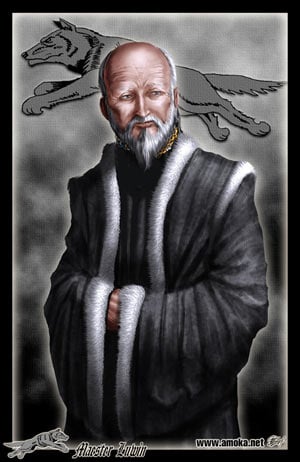
The role in which we see maester Luwin is one part teacher, scholar, doctor, adviser, and spy/post master for the Lord of Winterfell. He helps deliver the Lord's children, advises him in times of trouble, and even pursues his own studies part time. There are apparently only one maester at each castle, but he has servants which explains how he can carry out such a myriad of duties.

Credit to Amoka


There is really no real world analogy to the maesters of Westeros, they serve in a role that monks did for many noble families in Europe and Japan, and they occupy the place of the scholars of the early and late Middle Ages, then of course they even occupy the role of doctor. It's a fascinating social category which fills a huge number of niches in Westerosi society. That gives the maesters order exceptional power, but as I've seen many argue, also retards progress as it traps learning and knowledge in the hands of one organization.

Something else interesting to note is the clear technical ingenuity displayed in the construction of Winterfell, the keep built over natural hot springs which provide warmth even in the depths of winter and even allow for maintaining greenhouses! It speaks of a sort of lost technology from ancient times, or at the very least that the builder of Winterfell was farsighted and must have been a prodigy of some sort.

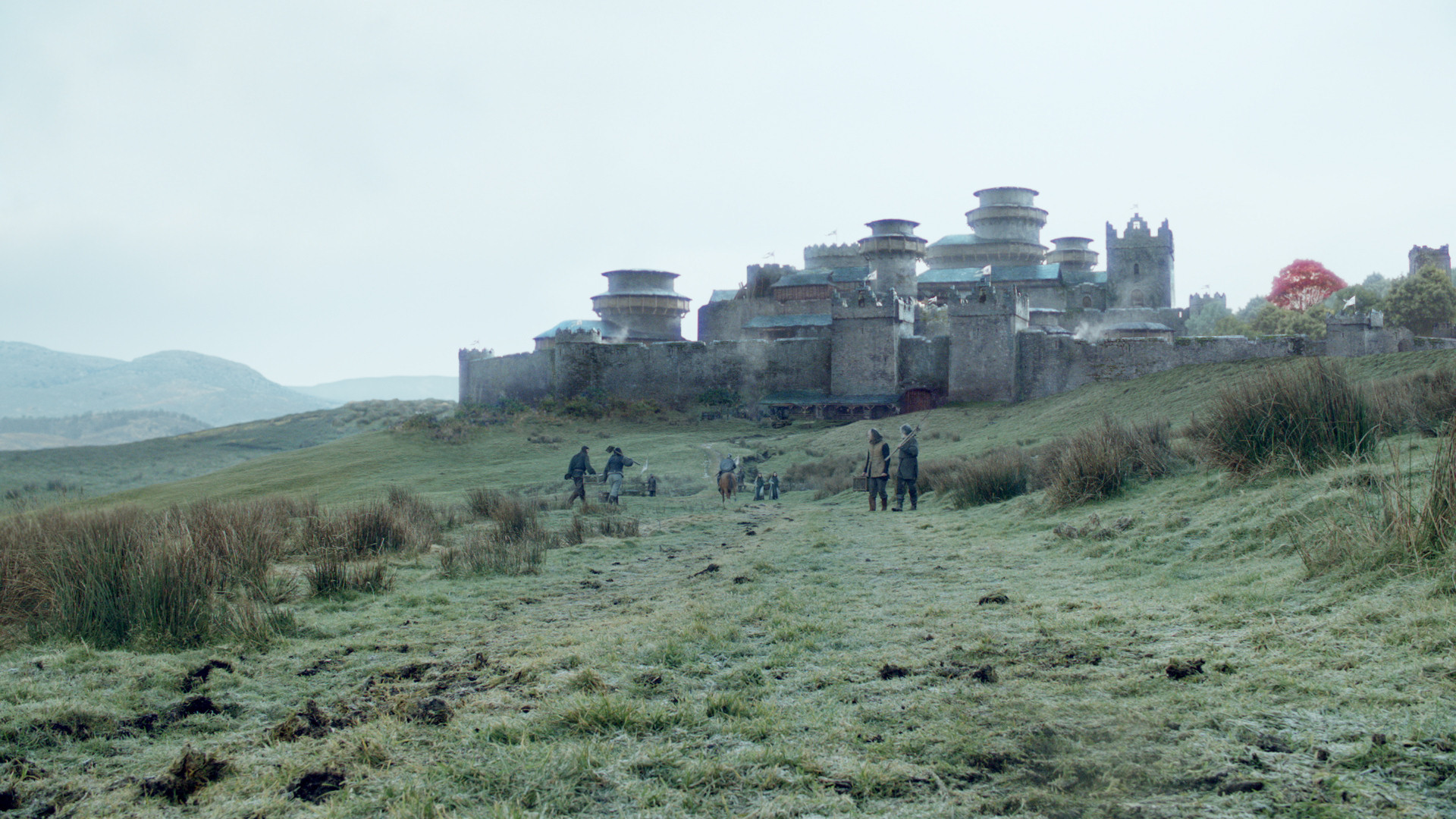
Winterfell, heart of the North.


Political:

Here we see some great feudal politics at work, and it even gets wound up in character interpretation.

Ned is considering refusing the position of Hand as he does not relish the idea of leaving his home and his family to run Robert's kingdom for him, and he has no stomach for the constant political infighting of the South. However, Catelyn wisely points out how Robert would feel denied and potentially become suspicious of Ned should he choose to reject what the king would see as a generous offer.

The interplay of vassal and lordly politics here is interesting as it does show how intrigues can begin from even the most innocuous events. Robert's sense of entitlement as king and Ned's simple desire to simply rule as Lord of Winterfell clash. It's also interesting how Ned's powers as Hand would allow him to have some measure of control over the other Houses and in how they answer to the Crown, which further emphasizes the burdens and responsibility Robert is placing on Ned by asking this of him.

However, we also see how Ned must begin divvying up his children for political gain. Robb, being his eldest and his heir, must stay in Winterfell and learn to rule in order to one day take his place as Lord of the North. This is just good sense as the heir must be safe and away from danger while being given good counsel and taught to rule well a justly. Thus it is Catelyn's place to stay behind and teach him. Rickon must also stay behind as he is too young to do much else.

Now Bran going along is an interesting choice. It is true he could help bridge the gap between Prince Joffery and the other Stark boys, but there is no real political purpose to his accompaniment of his father south. It could be of course that Ned simply wants one of his male children there looking out for the girls in times of trouble.

The two daughters of course, are even more self-explanatory. They are bargaining chips in the feudal game. While Sansa is already tied to Joffery to cement a new dynastic marriage Arya is young and a wildcard who could be used as a way to cement an alliance as well as to lure other lords in with promises of ties to a Great House. It's a dirty look into how even children are pawns in the game of thrones.

On the other side of the political coin, its clear that there is friction between the Lannisters, Baratheons, and Starks. The friction comes from what is clearly a loveless marriage between Robert and Cersei while the Starks simply mistrust the Lannisters due to Tywin's brutality during the rebellion. That this friction might have made its way into an outright murder of the king's last non-Lannister adviser (and Robert's right hand man) is something even the reluctant Ned cannot ignore.

Of course this is the opening moves of the far-sighted (if not intricately planned) game by Littlefinger to destabilize the realm in order to maneuver his way into power. This is one of the deeper intrigues of the series which deserves some in depth analysis. It's definitely not the opening move of the scheme (as Littlefinger first had to establish himself as a power broker in the capital) but it is one of the more important moves for the narrative of the whole plot of the series.

The genius of this move is self-evident. The Starks and Lannisters already dislike one another and it requires no real effort on Littlefinger's part, and similarly he has little risk of exposure as the Lannisters have little reason to out Littlefinger since Jaimie and Cersei have no reason to reveal their incestuous ways. It's a perfect web of coincidental interests which allow Littlefinger to advance his own schemes while allowing the two Lannister twins to keep their incestuous secret safe.

Now as to why each side benefits from the murder of Jon Arryn:

Littlefinger - Petry Baelish benefits from the death of Jon Arryn for two reasons, one is that the man who was for all intents and purposes running the realm is now dead. He can no longer represent an obstacle to Littlefinger's more long term plans.

It's also the nudge he needs to destabilize the kingdom so he can begin climbing the rungs of power. More on how risky portions of Littlefinger's plans are later.

The Lannisters - For Cersei and Jaimie it is simply a matter of  self-interest and survival. Jon Arryn was clearly growing suspicious of all of Robert's fair haired children and found himself (with Stannis) investigating the parentage of Robert's bastards. This of course would have exposed the actions of the Lannisters to the world, spelled their deaths, and brought great dishonor upon their House.

Killing Jon Arryn was just the way they would end up surviving this crisis.

Now this may explain some of the later collusion by the two groups (Cersei helping Littlefinger and Littlefinger doing his best to help Cersei's financial issues) but I personally believe that in the death of Jon Arryn it was more coincidental collusion rather than a joint scheme. More on that later though.

Character:

Not very much new character wise. We see Catelyn's dogged determination to be rid of her husbands bastard son and her fierce devotion to her family. We also see she is a practical woman and incredibly trusting.

However, we also get a rare look at something which is driving Ned forward. He realizes that he was not meant to rule, not even meant to marry his wife. His elder brother Brandon, who was murdered by the Mad King, was meant to rule Winterfell and so he was never truly trained for politics and rule the way his brother would have been. It's clear that this haunts his decisions, thoughts, and actions. It is hard to grow up in a siblings shadow, but then being thrust into a position that that sibling was supposed to occupy and without a father to guide you is even worse!

Brandon Stark, by Dejan_Delic


Ned had to do some quick growing up as a child, and he did much of that on the battlefield. It says something that Ned turned out the way he did really.

Thursday, 27 February 2014

Eddard I

WARNING SPOILERS FOR ALL BOOKS AHEAD:

Synopsis: Here we finally get a look inside the head of the Lord of Winterfell himself. This is Eddard's first chapter and don't worry, we'll be having a look at him for a long time to come. Here we are introduced to a whole host of characters Lannister and all, we also finally get a look at King Robert Baratheon. Robert makes some courtesy calls, visits the grave of his dead love, and against Ned Starks wishes appoints him Hand of the King.


What do we learn?:

Culture:

Well I can't say we learn much more culturally here than we did in other chapters but there are some interesting insights. On the one hand we have yet another look at just how different the North is from the many Southern realms, what with Ned's talk of little humor in the North and his dutiful attitude and talk of honor.

We also see some of the ancient glory of House Stark. There is a great crypt beneath Winterfell where all the Lords (and Kings) of Winter lay to rest. Clearly these are old crypts which stretch back hundreds of years as we see some of the earliest Kings of Winter sitting on their thrones with swords in hand and wolves at their feet. It's interesting that they have the iron swords placed upon their graves in order to keep their spirits locked inside (Which Ned humorously reflects is a good thing since the original lords of Winterfell were harsh men who styled themselves King in the North, which implied they were the ones who conquered all the North quite brutally).

The description of the South in summer is also one which is in stark comparison to the North, one of ripe harvests, rich wines, lush fields, and bustling trade and economy. The North on the other hand is subject to summer snows, vast empty territories, and a dour and serious people who do what they have to in order to survive.

All in all rather cheerful.

As an extra note I'm mildly amused to discover I had forgotten that phrases like "The Others take him" are considered swear words or curses. It really goes to show how the supposedly legendary threat of the Others really pervades the culture of Westeros, and for all the men of the modern day scoff at the idea of them existing, the cultural memory of the Others and their invasion is deeply ingrained into the Westerosi psyche.

Political:

Thankfully unlike the last chapter, this one is fairly meaty with some lovely political details, especially in light of the death of Jon Arryn.

I haven't talked much about the Warden system of Westeros (outside my one essay of course) but here I might as well bring it up since it is an important point. The title of Warden is purely military and even as Ned points out "In peace the title is only an honor." However we also learn that it is one which is almost hereditary, and removing that title would evidently be something which might offer an affront to a noble house "the title comes with the domain" suggesting that is has been centuries since the honor/duties of Warden were transferred from a Great House. It's even a part of Ned's official title.

Here though we see that Robert has a practical reason for considering shifting the title away from Robert Arryn, even though he is the head (in name at least) of House Arryn he is only a child, six and sickly to quote Robert directly, and a sickly child is no war leader so now he must find someone suitable to hold the title.

This could be a mild political affront to a House with as much history and honor as the Arryn's so Ned is probably right to suggest Robert tread carefully, but Robert's practical concern of potential invasions and potential internal turmoil (not to mention the mountain clans which seem to eternally plague the Vale) are quite valid and actually shows some good forethought for ruling on his part, as much as he complains about having to do it.

Mind you Lysa Arryn's flight from Kings Landing in the middle of the night may have irked Robert, and this is a man not above being petty, but here I think his concern is much more practical.

However, Robert also has a much more important position to fill, that of the Hand of the King. The Handship is a rather difficult office to explain but we have Ned lay out the full authority of the Hand in this chapter:

"The Hand of the King was the second-most powerful man in the Seven Kingdoms. He spoke with the king’s voice, commanded the king’s armies, drafted the king’s laws. Robert was offering him a responsibility as large as the realm itself."
This is a handy way to get a feel for the power of the Hand and what his duties are. Though as Robert points out, he is merely just giving the job of ruling the realm to Ned.


It's hard to define exactly what the Hand is, it's a very original office which seems to combine the roles of First Councilor and Prime Minister into a single office. He is given charge over the Small Council, given command of the King's Laws, and given control over the very power the King can wield himself (and it is implied only the king could overrule him if he made a proclamation). This is quite a prestigious honor and one which easily makes Ned one of the most powerful men in the Seven Kingdoms and easily enforces the Stark-Baratheon alliance, to say nothing of helping keep the Tullys and Arryn's in line. Couple this with Robert's marriage to Cersei Lannister which adds the wealthy and powerful House Lannister into the mix and you have a dynasty which should truly be able to stand the test of the centuries.

Ned's appointment should of course simply seal the Baratheon kingship into its new mantle as overlords of Westeros, but as we all know that isn't quite what happens.

Politically we also get a good look at the system of fostering which is prevalent throughout Westeros. We learn both Robert and Ned were fostered at the Eyrie under Jon Arryn and that Robert had plans to foster Robert Arryn at Casterly Rock in order to help cement cooperation between the Great Houses. Fostering is of course a valuable tool since it shows your trust in a fellow lord and how it can create great bonds between future heirs or members of the Great Houses.

Of course we also see the flip side where a ward can easily become a hostage, as is the case with Theon Greyjoy, who was taken in the aftermath of the failed Greyjoy Rebellion.

Character:

We get a good look here at the inner workings of both Ned Stark and Robert Baratheon, both two of the most powerful men in the Seven Kingdoms.

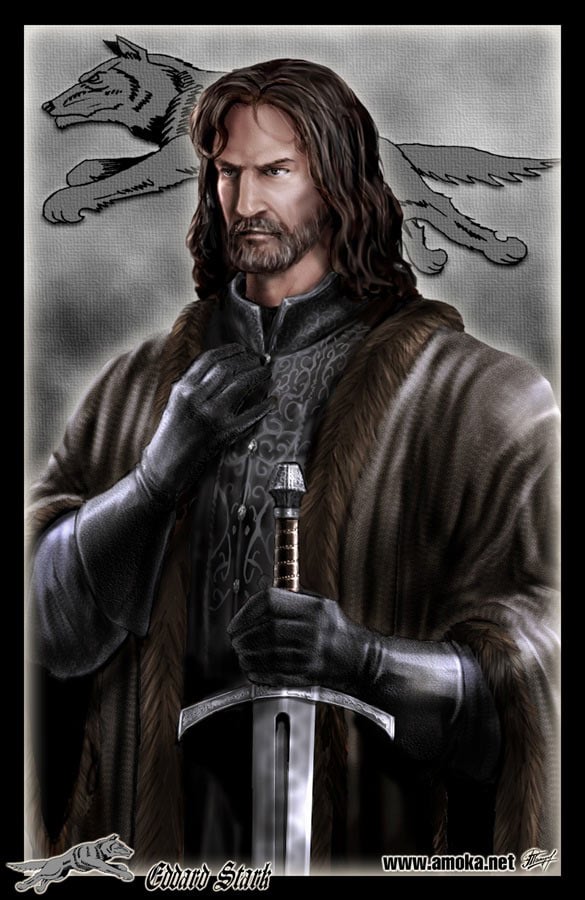
Credit to Amoka


First off let's take a look inside the head of the Lord of Winterfell. As shown previously Ned is an honorable man with a deep sense of duty to his people, his family, and his king. Seeing his interaction with Robert here is what truly shows us just how dutiful a man Eddard really is. He says things because it is expected of him and he treats Robert with the proper deference and distance as expected from a vassal to a liege lord.

Building up on this we really see that it isn't a face Ned puts on and he really is as honorable and family oriented as others make him out to be. We also see where these traits can be a fault. Rather than truly arguing with Robert he tries to humor his king, and rather than voicing any immediate doubts he goes to humor the man who he would be better off talking to purely as a friend.

However, he also seems to have a deep seeded, almost instinctual, distrust of the Lannisters after having dealt with Tywin's casual betrayal of Aerys during the rebellion, and Jaime's kingslaying. Then of course there is the matter of Tywin having the Targaryen heirs he could lay his hands on butchered by his knights. This leads to Ned's internal monologue mistrusting Tywin and thinking about how he'd rather trust a child with a pit viper.

While maybe not a major character flaw for mistrusting all things Lannister, it does mean he can take things a little too far in that mistrust as we will see later.

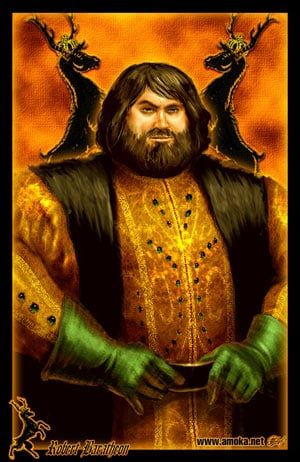
Now for our good friend and the King of the Seven Kingdoms, Robert Baratheon.

Despite what many say about Robert being a bad king (and believe me, he isn't a good one) he actually acquits himself well here, he is well aware of the practical military realities and even some of the political problems facing his rule (something he does consistently show) but I think what I said above is true above all. Robert is well aware of the military problems the kingdom faces, but he is not incredibly astute at the art of politics.

Sure his cheerful and amiable personality wins him fast friends and even cows some of his enemies, but he is not well suited to playing the game of thrones. Truly it was Jon Arryn who ran the kingdom despite the troubles placed upon it by Robert.

Here though we see that yes Robert is practical, but for all that he is stuck in the past. He spurns his queen (the link to an incredibly powerful house) and immediately goes to visit the grave of his long lost dead love, and while he is there he speaks angrily of killing Rhaegar at the Battle of the Trident. He speaks contemptuously of his time on the throne, and seems to detest it as much as any man can detest a job.

Credit to Abe Papakhian


However, that being said the man is self-aware of his problems, but he chooses to do nothing about it. He knows he is a poor king but he flits between hating the job and doing it with alarming regularity, one minute with Ned he is all chummy and contemptuous of the throne, the next he is using his power like a weapon to bully Ned into seeing things his way. Robert is clearly a man who doesn't quite know what to do with the power he wields, and as time will show, is clearly one who never wanted it in the first place.

History:

Well I could offer you a historical analysis about fostering, wards and hostages, but I think I can speak more about that later. For now let's talk about something from Westeros's history which I think demonstrates just how decent Robert was as king.

This of course all relates back to Eddard's ward, Theon Greyjoy.

I am of course referring to the Greyjoy Rebellion which is mentioned in this chapter and I'm hoping to use it to underscore a point about Robert's personality.

First some background for those who are unaware of the whole story here. The Greyjoy Rebellion was a revolt insitigated when the ever enterprising Balon Greyjoy crowned himself King of the Iron Islands. His thinking was that Robert was a new king, and he would never be able to rally the support of the Great Houses like a Targaryen king could have, he also believed he held the edge over Robert at sea.

Unfortunately Greyjoy miscalculated.

His revolt took place a full six years after Robert had seated himself upon the throne, plenty of time for Robert to pardon enemies and solidify alliances, which in turn left Balon alone to fight against the strength of every Great House save Dorne.

Balon's fleets were crushed by Stannis and his castle was besieged and stormed by Robert who swiftly de-crowned the so-called King of the Iron Islands. Balon again bent the knee.


There are two things which can be taken away from this, one is that as Ned had pointed out, several years ago Robert had still been much the same man, a warrior and a leader despite six years on the throne, and it showed that Robert was still in his prime, strong, capable, and intelligent. The second is that it shows Robert's surprising penchant for clemency. Though I doubt he was following Tywin's ideas he is clearly living by Tywin's maxim of:

"When your enemies defy you, you must serve them steel and fire. When they go to their knees, however, you must help them back to their feet. Elsewise no man will ever bend the knee to you."
This of course is how Robert managed to win the kingdom in the first place. He was merciful to his enemies, but swift to punish those who disobeyed him. Instead of engaging in wholesale slaughter of rebels he pardoned them and worked to integrate them back into the kingdom.

This is Robert in his prime, this is Robert with sound advise, and this is when Robert was still doing his best to keep the throne, but as his physical appearance and haunted eyes point out, that Robert has long since changed.

Friday, 24 January 2014

The Noble Titles of Westeros

WARNING: SPOILERS AHEAD FOR ALL BOOKS

When looking at the nobility of Westeros and its various incarnations we actually see little variety among the noble houses which stretch from the Wall to the Sea of Dorne. In fact compared to our world the nobility of Westeros and its various ranks and titles are rather simplistic. We know that there are the Lord's Paramount of the various regions, that certain ones also claim the title of Warden, we know about the distinction between knightly houses and lordly houses, and finally we can see the difference between the Great Houses and the Royal House.

Verily this can lead to some confusion over rank and status, is one lord inferior to another, or is the Lord of Raventree Hall equal to the Lord of Stone Hedge or does one have somewhat higher social standing than the other? Similarly are we to infer that House Frey is of lesser standing than House Mallister or that Lord Frey is unequal to his peers? Is it because of the relative youth of his house or because most outrank him socially?

These are difficult questions to answer. This of course could be chalked up to the simplicity of the noble titles in Westeros. GRRM himself has said that he feels in hindsight he should probably have used at least one more rank when spelling out the forms of nobility in Westeros. Even he acknowledges though that the sheer number of different rankings in our own medieval history was absurd and confusing. However, I think it is important that we get a firm fix on what GRRM could have done to iron out these kinks in terms of Westerosi rank. To do so I am going to look at the noble houses in the books, their general standing, and of course see where you could possibly apply.

I'll generally be looking at the titles and positions in this order:

The Royal House
The Great Houses/Lords Paramount
Noble Houses
Knightly Houses

First off we can take a look at the king and his title. It all seems fairly straight forward but upon examination it seems to have some glaring faults in not spelling out the whole of the king's authority. Let's look at it in full shall we?

The full title of the King would go something like this: His Grace King Robert of House Baratheon, First of His Name, King of the Andals, Rhoynar, and the First Men, Lord of the Seven Kingdoms, and Protector of the Realm.

Credit to Amoka


Fairly straight forward right? I don't think so personally. Here we see the monarchic title as one which seems to merely bind diverse polities and peoples together, there is emphasis on the overlordship of the various peoples in the Seven Kingdoms and an emphasis on ruling all the different realms. There is of course the mention of the king as the supreme military leader and protector of the realm clearly indicating his military responsibility in the defense of the realm.

However, it seems to be lacking a number of things.

Firstly (and most obviously I think) it seems to lack any reference to the religious responsibilities or the favor of the dominant religion of Westeros the Faith of the Seven. Nowhere in his title does it mention the Faith, any religious obligation, or favor. Compare that to the title of the British monarch which explicitly states that the monarch rules 'By the Grace of God' and is 'The Defender of the Faith'. We do know that the monarch is crowned by the Faith and that they are anointed by the High Septon, but that gives us very little knowledge on what the mechanisms for the recognition of the Faith are (in fact we get perilous little information on the workings of the Faith of the Seven until A Feast For Crows).

Secondly despite the title of 'Lord of the Seven Kingdoms' there is a lack of acknowledgement over the King's personal authority of the Crownlands, which serves as the ruling Houses's personal demesne. Nowhere in the books do we really get an idea of how the king governs the Crownlands as its Lord Paramount, nor do we get a sense of what his duties are in ruling it. The lack of acknowledgement of this in the royal title is an oversight I think.

Finally there is an absence of mentioning how the King is the supreme justice in the realm. Yes it is implied as the right of the king and of course is in the law, but without it in the title, it is sincerely lacking I would say.

These are the great abscences I see in the royal title. Now If I were to have the King of Westeros's full title I would give it something like this: By the Light of the Seven, His Grace King Robert of House Baratheon, First of His Name, King of the Andals, Rhoynar, and the First Men, Lord of the Seven Kingdoms, Duke of the Crownlands, Supreme of Justice, Protector of the Realm, and Defender of the Faith.

Much more grandiose, but captures the full authority and duties as ruler of the Seven Kingdoms. Some would of course say that it is too unwieldy a title but I think for how grandiose titles could be in our time this one fits perfectly well!

Moving on to the next category I will be looking at the Lord's Paramount of Westeros, or as they are known the Great Houses.

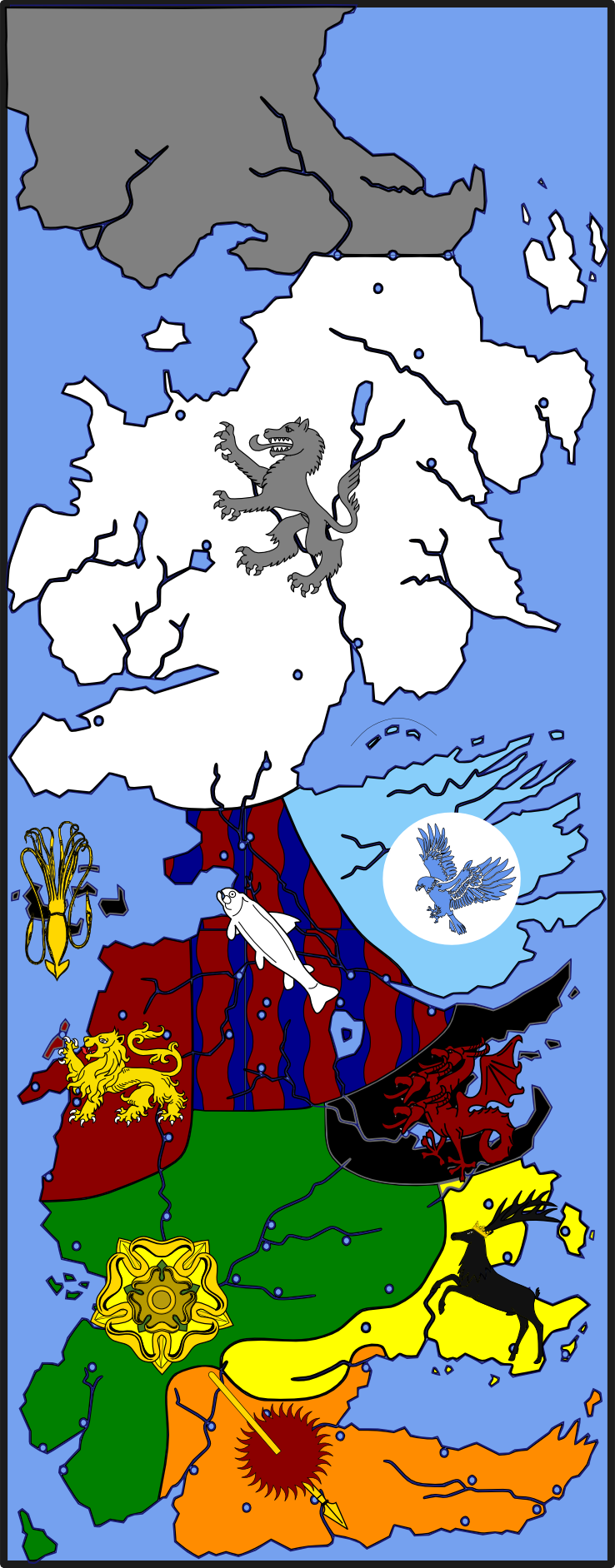
You have a Great House for each of the 8 separate realms of Westeros, each with differing amounts of power and prestige, and some having the added title of the Cardinal Wardens. There is only one mention of the Lord's Paramount in the book series though, and that is when discussing the removal of the Tully's as Lord's Paramount of the Riverlands. We are much more familiar with the discussion of the title of Warden and its implication, but more on that in a moment.

The Nine Regions of Westeros


The ruling Houses of these regions are the Great Houses of the realm, though this is rarely spelled out in detail but the implications and duties owed to them are often apparent. We also know that from the replacement of both House Tully and House Stark that this rank and title can be removed by royal decree and granted by such a decree. However it appears that it is a distinction which does not have to be renewed very often and seems to be one which has slowly become a fact of life in the realm and not one thought to be often challenged.

In light of both the power which is held by the Great Houses and their titles as Lord's Paramount I would propose that a good idea for GRRM had he given another noble ranking would have been to declare the Lord's Paramount Dukes. This not only gives them a clear rank above their other vassal houses, but adds to the de-facto hereditary position. This of course would still be subject to approval by the king and the removal of a house from power could be considered and enacted with ease, and that threat held above the Duke to ensure he doesn't get any ideas of rebelling.

Now the normal title of a Lord seems to go something like this: Eddard, Lord of Winterfell and Warden of the North. 

Now we can surmise that the title 'Lord of Winterfell' is the stand in for the title of Lord Paramount of the North since Winterfell is the de-facto capital of the Northern province. Much like Riverrun is the de-facto capital of the Riverlands and so forth. Unofficially it would seem that being lord of the capital is what encapsulates the ability to be Lord Paramount, but as we see when Petyr Baelish is declared Lord Paramount of the Riverlands and granted Harrenhall as his seat this is a concept which is fairly fluid and can apparently be changed at will. However, we also see the Frey who inherits Riverrun as mistakenly believing this elevates him to Lord Paramount of the Riverlands, which does show that tradition has handed down these great castles as the seats of power, but again, it appears to be a fluid institution.

Given the fluidity of the title I would personally propose it go something like this: Eddard, Duke of the North, Lord of Winterfell, Warden of the North (that last bit of course added on for accuracy).

This upgrades all the Lord's Paramount to the status of Dukes, gives themselves and their heirs an instantly recognizable social standing and higher authority over their vassals in a recognizable title. This would have helped balance things politically between the Lord's Paramount and their bannermen in many cases I feel as the authority and duties of a Duke over the whole of one of the regions of Westeros would grant them much more legitimacy and power.

The only regions I would see this distinction not working would be Dorne and the Iron Islands where the cultural differences would keep them from adopting such a title.

As a slight aside I would simply see the title of Warden, which is a purely military one, merely adding to the prestige of a Great House, and the reason it is sought after because it would potentially give them a degree of power over their social equals to command them as they saw fit.

Moving on let's examine the lesser houses and their titles. Here is somewhere where we would want to be more diverse in creating titles, but for simplicity I'm only going to suggest two distinctions. The two distinctions I would suggest are simply that between baron and lord. A baron would be a title of a greater lord who owns vast lands or is a much more wealthy house, and a regular lord would be one step above a knightly house.

The distinction is one I think is important for many reasons. Coming back to my question on the Frey's earlier, we can't know by title alone that House Frey is a younger house since its leader is named Lord just like every other noble in Westeros. I think it was a great opportunity that was missed in both narrative and sociopolitical terms to have Lord Walder Frey pining for both greater influence and a greater title. His House was one which was clearly rich, and strong, but being younger it didn't garner enough respect. I believe that the better driving motivation (and a clearer one) would have been Lord Walder to be wishing to become Baron Walder, since he clearly feels his house is on level with the Mallisters and even the Great Houses since he was so eager to gain marriage into one of them for his progeny.

So to put it in perspective I believe we would have had different addresses being doled out like this; let's say for a moment we are addressing Lord Jason Mallister of Seagard, with a baronial title he would most likely be styled Baron Seagard when addressed naturally and more formally as "My Lord Baron of Seagard" when addressed by his social inferiors. While addressing Walder Frey one would simply say, Lord Walder of the Twins, or more formally Lord Walder/Frey.

The fact that any lord would then have to address a baron more formally does two things in my eyes a) it establishes a balance of power between barons and their sworn houses (in regular Westeros parlance usually a lesser house or a knightly house being sworn to a more powerful house) which gives more of a degree of rank among them, and b) it has a better political aspect with Dukes having to worry more about their barons in the feudal politics ring and having a sure sign of rank and influence across the eight regions of Westeros.

Now for the last noble title, a knightly house. These are the lowest order of nobility on the pecking order since they consist of landed knights with small holdings. Towerhouses and small holdfasts these are the lesser of the lesser lords. Not powerful enough to claim themselves as full lords, and more often than not simply the vassals of a larger house. They are valued for their military service and little else. This can be seen by Houses like House Clegane, House Cassel, and House Connington of Griffon's Roost.

House Clegane, the most infamous Knightly House


Personally I actually see nothing wrong with their naming and rank as it is and simply think that in my revised system the ranking becomes more clear and the power distinctions between the Houses of Westeros come into sharper focus giving us a better view into the feudal politics.

Now to summarize, here is how this new ranking system would work:

1) The Royal House (supreme rulers of the realm)

2) The 8 Ducal Houses (appointed by the king)

3) Baronial Houses (sworn as bannermen to the Ducal Houses)

4) Lordly Houses (either powerful enough but without the title to be sworn in as full bannermen or simply sworn vassals to Baronial houses)

5) Knightly Houses (basically landed knights and are sworn to whichever noble house which has granted them land)

There we have it. This is my own little fan reorganization of the nobility and titles of Westeros. I leave it to you to see if that makes sense or if it even works in your heads. I know it does in mine and that's how I'll stick with it!